18 Sept 2010

God is free. Spinoza's Ethics, Book 1, Proposition 17, Summary with Deleuze's Commentary


[The first three subsections are my own overview notes. Under the Spinoza Ethics heading, there again is blue text, which is quotation from the English translation. My summary and commentary to this is bracketed in red. Deleuze's commentary is found near the end. The Latin text comes last.]


What's this proposition got to do with you?

We are all a part of a more fundamental reality. It is what underlies us and everything else. It in a way stands intrinsically 'below' all us. It is our substance. It makes us who we are fundamentally. We express it. And our fundamental underlying reality is itself free in what it does and undergoes. It might be that the way we ourselves act and feel is governed by something outside us. But from the perspective of the whole, there is no outside force causing reality's changes. We are small partial expressions of this one infinite self-causing substance.


Brief Summary:

God, Who is the infinite underlying substance of all reality acts only on His own accord.


Points Relative to Deleuze:
[Under Ongoing Revision]

The underlying 'substance,' so to speak, of all reality is difference. And what makes us who we are is that we are made-up of variations expressing difference. But this difference is not difference in the sense that one thing is lacking what something else has. Rather, the difference underlying reality and our very own selves is a more profound sort of difference. It is difference as an empty form of difference, not yet filled by explicit identifiable differences. It is only difference in the sense that the multiplicity of tendencies-toward-variation are all implicit in it. It is not that they are hidden. They are fully expressed, but only implicitly, as inner tendencies, that is, as intensities. All the many particular differences which we see (and secondarily understand in terms of one thing lacking what another thing has)- all these actual differences are explicit proof of the more infinitely inclusive underlying difference which makes these particular differences allowable in the first place. But the underlying difference is singular only in the sense that it is like a pure heterogeneity, nowhere the same. We might, if we insist, say that there is just one underlying heterogeneity, but that is also like saying that there is one infinite multiplicity that underlies all reality and our own selves as well.

Baruch Spinoza
Ethics
Part I "Concerning God"
Proposition XVII

PROP. XVII. God acts solely by the laws of his own nature, and is not constrained by anyone.

[God acts on his own account and in accordance with his own self. His actions are never influenced by anything other than himself.]

Proof .— We have just shown (in Prop. xvi.), that solely from the necessity of the divine nature, or, what is the same thing, solely from the laws of his nature, an infinite number of things absolutely follow in an infinite number of ways ; and we proved (in Prop. xv.), that without God nothing can be nor be conceived ; but that all things are in God. Wherefore nothing can exist outside himself, whereby he can be conditioned or constrained to act. Wherefore God acts solely by the laws of his own nature, and is not constrained by anyone. Q.E.D.

[A definition for something states things about it. But it also implies other things too. From the definition of a triangle, we can deductively infer that its angles equal two right angles. And the more that the definition implies or expresses (and thus the greater its reality or essence), the more that follows from its definition. The essence and nature of God is infinite, so an infinite number of things follows in an infinite number of ways from his definition. We also determined that there is only one substance: God. Substances can be conceived only in and through themselves. Thus there is only God who can be conceived in and through itself. Modes modify a substance. But they must be conceived through the substance they modify. But things exist either in themselves or in something else. So there are only substances and modes. Both of them are conceived through God. Hence all things follow from God. And because his essence is infinite, that means all the infinity of things follow from Him.

So God is the cause of the infinity of things following from Him. And there is nothing but God. Hence there is nothing outside Him to constrain or condition his actions. Hence God acts solely on his own account, and his actions are not constrained by anything else.]

Corollary I.-It follows : 1. That there can be no cause which, either extrinsically or intrinsically, besides the perfection of his own nature, moves God to act.

[If God acts only on his own account, then He does not act because of anything else. In other words, there is no other cause, whether within him or outside him, that causes God to act, other than the infinite fullness of his own nature.]

Corollary II.-It follows : 2. That God is the sole free cause. For God alone exists by the sole necessity of his nature (by Prop. xi. and Prop. xiv., Coroll. i.), and acts by the sole necessity of his own nature, wherefore God is (by Def. vii.) the sole free cause. Q.E.D.

[God is self-caused, so he necessarily exists. And as well, there is one God whose substance is absolutely infinite. As we noted above, he acts solely on his own account. We call something free when it exists solely by the necessity of its own nature (that is, when its existence follows from its essence or definition), and when also its actions are determined by itself alone. Hence God is the only free cause.]

Note .— Others think that God is a free cause, because he can, as they think, bring it about, that those things which we have said follow from his nature-that is, which are in his power, should not come to pass, or should not be produced by him. But this is the same as if they said, that God could bring it about, that it should follow from the nature of a triangle that its three interior angles should not be equal to two right angles ; or that from a given cause no effect should follow, which is absurd.

[Some people will come to Spinoza's conclusion, that God is an uncaused (free) cause, but they will do so by a different sort of reasoning. They note that there are many beings that God causes. But He also could have not caused them as well. Hence in a way, all things are under God's power, and not the other way around. Hence God is completely unrestrained in his actions. But Spinoza seems to think that whatever God causes could not have been otherwise. God is infinite, and He expresses himself in an infinite number of ways. So it is because of God's essence that all the things we see follow necessarily from him. So although God is the only absolutely necessary being, it is necessary that he be the cause of all things he produces. It cannot be that any being we see could not have been caused. That is like saying God is not infinite and does not completely express his infinity; for, any such caused being expresses his infinity.]

Moreover, I will show below, without the aid of this proposition, that neither intellect nor will appertain to God’s nature. I know that there are many who think that they can show, that supreme intellect and free will do appertain to God’s nature ; for they say they know of nothing more perfect, which they can attribute to God, than that which is the highest perfection in ourselves. Further, although they conceive God as actually supremely intelligent, they yet do not believe that he can bring into existence everything which he actually understands, for they think that they would thus destroy God’s power. If, they contend, God had created everything which is in his intellect, he would not be able to create anything more, and this, they think, would clash with God’s omnipotence ; therefore, they prefer to asset that God is indifferent to all things, and that he creates nothing except that which he has decided, by some absolute exercise of will, to create.

[Some people think that anything good about humans must be found in a more perfect form in God. We have intellects and will, so perhaps God has a supreme intellect and will.

These people think something in addition to this. So in the first place they think God has a supreme intellect. But they do not believe that God has created everything that He can think of. For, if He had, he would have run out of things to create. This would put an end or limit to his powers to create. But God supposedly has unlimited powers. Hence they think that God does not create everything he can conceive, but rather He uses his supreme will to decide to create
only some certain things.]

However, I think I have shown sufficiently clearly (by Prop. xvi.), that from God’s supreme power, or infinite nature, an infinite number of things-that is, all things have necessarily flowed forth in an infinite number of ways, or always flow from the same necessity ; in the same way as from the nature of a triangle it follows from eternity and for eternity, that its three interior angles are equal to two right angles. Wherefore the omnipotence of God has been displayed from all eternity, and will for all eternity remain in the same state of activity. This manner of treating the question attributes to God an omnipotence, in my opinion, far more perfect. For, otherwise, we are compelled to confess that God understands an infinite number of creatable things, which he will never be able to create, for, if he created all that he understands, he would, according to this showing, exhaust his omnipotence, and render himself imperfect. Wherefore, in order to establish that God is perfect, we should be reduced to establishing at the same time, that he cannot bring to pass everything over which his power extends ; this seems to be a hypothesis most absurd, and most repugnant to God’s omnipotence.

[But, Spinoza reminds us, we have already seen that from God's infinite essence, an infinity of things necessarily follow and are expressed in an infinity of ways. This holds for all eternity, and not just for his state at any given point in durational time.

Spinoza thinks that this understanding of God portrays Him as expressing a higher form of perfection. Those who take the other position say that he thinks things, but cannot create them, because by exhausting all his possibilities for creation, he thereby limits his creative power. Spinoza notes that this is equivalent to saying that God has a limitation to his power to create; for, he always must withhold something from creation. May I note something like this in Heidegger's theory of origination. One conception could be that God is always withholding something from creation, so that there is always something to be created, and so the created is always tending toward that hidden uncreated (Also see the MisHearing Heidegger section of this text, the part discussing the poetic withholding of the gods.) For Spinoza, God would have more power to create if he holds nothing back from the expression of his infinite nature.]

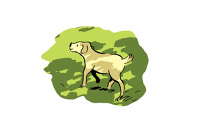
Further (to say a word here concerning the intellect and the will which we attribute to God), if intellect and will appertain to the eternal essence of God, we must take these words in some significance quite different from those they usually bear. For intellect and will, which should constitute the essence of God, would perforce be as far apart as the poles from the human intellect and will, in fact, would have nothing in common with them but the name ; there would be about as much correspondence between the two as there is between the Dog, the heavenly constellation, and a dog, an animal that barks. This I will prove as follows. If intellect belongs to the divine nature, it cannot be in nature, as ours is generally thought to be, posterior to, or simultaneous with the things understood, inasmuch as God is prior to all things by reason of his causality (Prop. xvi., Coroll. i.). On the contrary, the truth and formal essence of things is as it is, because it exists by representation as such in the intellect of God. Wherefore the intellect of God, in so far as it is conceived to constitute God’s essence, is, in reality, the cause of things, both of their essence and of their existence. This seems to have been recognized by those who have asserted, that God’s intellect, God’s will, and God’s power, are one and the same. As, therefore, God’s intellect is the sole cause of things, namely, both of their essence and existence, it must necessarily differ from them in respect to its essence, and in respect to its existence. For a cause differs from a thing it causes, precisely in the quality which the latter gains from the former.

[God is the efficient cause of all things. And we understand an effect by understanding the cause. Thus God's understanding is prior to the things understood, where in contrast, our understanding of this is posterior to them. So because the ideas for things in God's mind are prior to the things, the truth and essence of things is what it is because that is how the things are represented in God's mind. God's intellect then is the cause for the essence and existence of all things. This corresponds to the more common belief that God's will, intellect, and power are all one in the same. But, causes are different from their effects. God's intellect is the cause of our intellects, but that then means his intellect must be of a different nature than ours. Hence we both have an intellect in name only, but these intellects are so different that it is misleading for us to use the same word 'intellect' to refer to both.]

For example, a man is the cause of another man’s existence, but not of his essence (for the latter is an eternal truth), and, therefore, the two men may be entirely similar in essence, but must be different in existence ; and hence if the existence of one of them cease, the existence of the other will not necessarily cease also ; but if the essence of one could be destroyed, and be made false, the essence of the other would be destroyed also. Wherefore, a thing which is the cause both of the essence and of the existence of a given effect, must differ from such effect both in respect to its essence, and also in respect to its existence. Now the intellect of God is the cause both of the essence and the existence of our intellect ; therefore, the intellect of God in so far as it is conceived to constitute the divine essence, differs from our intellect both in respect to essence and in respect to existence, nor can it in anywise agree therewith save in name, as we said before. The reasoning would be identical in the case of the will, as anyone can easily see.

[Now consider how human beings come from other human beings. The parents are the cause of the existence of their children. But the essence of that child is something they do not cause. The essence is something eternal. So say that the child's essence is very similar to the father's. Even though their essences are similar, their existences must be different. This way, if one of them dies, the other can go on living. But it is in the essence of the father to have caused the existence of the child. So if we delete the essence of the child, we delete the essence of the father too, and vice-versa. This is like saying that it is in the essence of the father that he be the father of some child, but also saying that there is no such child, not even in the mind of God. So when essences are similar, like between fathers and their children, it cannot be said that that one essence is the cause of the other, because their similarity makes them mutually dependent on each other for their essence. So for something to cause both the essence and the existence of another being, they must differ both in essence and existence, for that way it is conceivable that the one can exist prior to the other. But God's intellect is the cause of the existence and essence of our intellects. This means that his intellect must be very different from ours in both its essence and existence.]

From Deleuze's Commentary:

[ft.8 to Ch.2]:
For the criticism of equivocation, see E I.17c2: If will and understanding were attributes essentially to God, this would be equivocally, and so purely verbally, more or less as the word "dog" indicates a heavenly constellation. [356a]

Sur la critique de l'équivocity, cf. E, I, 17, cor. 2. (Si la volonté et l'entendement s'attriuaient essentiallement à Dieu, ce serait de manière équivoque, donc toute verbale, à peu près comme le mot "chien" désigne une constellation céleste.) [39d]


For the criticism of equivocation, see E I.17c2: If will and understanding were attributes essentially to God, this would be equivocally, and so purely verbally, more or less as the word "dog" indicates a heavenly constellation. [356a]

Sur la critique de l'équivocité, cf. E, I, 17, cor. 2. (Si la volonté et l'entendement s'attribuaient essentiellement à Dieu, ce serait de manière équivoque, donc toute verbale, à peu près comme le mot « chien » désigne une constellation céleste.) [39d]


Spinoza can thus pride himself not only on having reduced to the status of creatures things that had previously been considered as attributes of God, but on having at the same time raised to the status of divine attributes things that had before him been considered as creatures. [ft.10] As a rule Spinoza sees no contradiction between the assertion of a community of form and the positing of a distinction of essences. In adjacent passages he says: (1) If things have nothing in common, one cannot be the cause of the other; (2) If a thing is cause of both the essence and existence of another, then it must differ from it both in the ground of its essence, and in that of its existence. [ft.11] [Deleuze, 48bc]

C’est pourquoi Spinoza ne se vante pas seulement d’avoir réduit à l’état de créatures des choses que l’on considérait jusqu’à lui comme des attributs de Dieu, mais en même temps d’avoir élevé à l’état d’attributs de Dieu des choses que l’on considérait comme des créatures [ft.10]. En règle générale, Spinoza ne voit aucune contradiction entre l’affirmation d’une communauté de forme et la position d’une distinction d’essences. Il dira dans des textes voisins : 1°) si des choses n’ont rien de commun entre elles, l’une ne peut /être la cause de l’autre ; 2°) si une chose est cause de l’essence et de l’existence d’une autre, elle doit en différer tant en raison de l’essence qu’en raison de l’existence [ft.11]. [Deleuze, 39d]


Suppose by analogy with man, that understanding and will were attributes of God himself. [ft.8, citation]. This would not get us very far, for we would be attributing understanding and will to God only equivocally: because of the distinction of divine and human essence, divine and human understanding and will share a “ community of name” only, like dog-star and barking dog-animal. Numerous absurdities follow, according to which God must contain eminently the perfection through which he produces creatures. 1. From the viewpoint of understanding, God will be said to be “omnipotent” precisely because he is “unable” to create things with perfections as he understands them, that is, in the same form as they belong to him. So one purports to demonstrate the omnipotence of God through an impotence. [ft.9, citation] 2. From the viewpoint of will, it will be said that God might have willed otherwise, or that things might have been of another nature had God so willed. God is attributed will, it is made his essence; but it is supposed at the same time that he might have had a different will, and so a different essence (unless divine will be made a pure thing of reason, in which case the contradictions are only increased); this allows the supposition of two or more possible gods. So here variability and plurality are introduced into God, to demonstrate his eminence. [ft.10] [Deleuze, 103b-104]

Supposons, par analogie avec l’homme, qui l’ entendement et la volonté soient des attributs de Dieu lui-même [ft.8, citation]. Nous aurons beau faire, nous n’attribuons à Dieu volonté et entendement que de manière équivoque : en vertu de la distinction d’essence entre l’homme et Dieu, la volonté et l’entendement divins n’auront avec l’humain qu’une « communauté de nom », comme le Chien-constellation avec le chien-animal aboyant. En sortent de nombreuses absurdités, d’après lesquelles Dieu devra contenir éminemment les perfections sous lesquelles il produit les créatures. 1°) Du point de vue de l’entendement : on dira que Dieu est « tout-puissant » précisément parce qu’il « ne peut pas » créer les choses avec les mêmes perfections qu’il les entend, c’est-à-dire sous les mêmes formes que celles qui lui appartiennent. Ainsi l’on prétend prouver la toute-puissance de Dieu par une impuissance [ft.9, citation]. 2°) Du point de vue de la volonté : on dira que Dieu aurait pu vouloir autre chose, ou que les choses auraient pu être d’une autre nature si Dieu l’avait voulu. On attribue à Dieu la volonté, on en fait donc l’essence de Dieu ; mais on suppose en même temps que Dieu aurait pu avoir une autre volonté, donc une autre essence (à moins de faire de la volonté divine un pur être de raison, auquel cas les contradictions redoublent) ; dès lors on suppose que deux ou plusieurs dieux pourraient être donnés. Cette fois, on met en Dieu variabilité et pluralité pour prouver son éminence [ft.10]. (Deleuze 91a.c)


In short God acts “by the laws of his nature alone”: he could not have produced anything else, or produced things in a different order, except by having a different nature. [ft.11, citation] [Deleuze, 104bc]

En un mot, Dieu agit « d’après les seules lois de sa nature » : il n’aurait pu produire autre chose, ni produire le choses dans un autre ordre, sans avoir une autre nature. [ft.11, citation]. [Deleuze, 92a]


Even in the Ethics he uses effluere to indicate the way modes follow from substance (I.17s) [Deleuze, 376a, ft.4]

Même dans l’Ethique, il emploiera effluere pour indiquer la manière dont les modes suivent de la substance (I, 17, sc.) [Deleuze, 155d, ft.4]


If all essences agree, this is just because they are not causes one of another, but all have God as their cause. Within we consider them concretely, referring them all to the cause on which they depend, we posit them all together, coexisting and agreeing. [ft.10: On the agreement of the essences, cf. E I.17s] [Deleuze 194c; 379a]

Si toutes les essences conviennent, c’est précisément parce qu’elles ne sont pas causes les unes des autres, mais, toutes ont Dieu pour cause. Quand nous les considérons concrètement, les rapportant à la cause dont elles dépendent, nous les posons toutes ensemble, coexistantes et convenantes. [ft.10 : Sur la convenance des essences, cf. E, I, 17, sc.]


From the Latin text:

PROPOSITIO XVII

Deus ex solis suæ naturæ legibus, & a nemine coactus agit.

Demonstratio

Ex sola divinæ naturæ necessitate, vel (quod idem est) ex solis ejusdem naturæ legibus, infinita absolute sequi, modo Prop. 16 ostendimus; & Prop. 15 demonstravimus, nihil sine Deo esse, nec concipi posse, sed omnia in Deo esse; quare nihil extra ipsum esse potest, a quo ad agendum determinetur, vel cogatur, atque adeo Deus ex solis suæ naturæ legibus, & a nemine coactus agit. Q.E.D.

Corollarium I

Hinc sequitur Iº. nullam dari causam, quæ Deum extrinsece, vel intrinsece, præter ipsius naturæ perfectionem, incitet ad agendum.

Corollarium II

Sequitur IIº. solum Deum esse causam liberam. Deus enim solus ex sola suæ naturæ necessitate existit (per Prop. 11 & Coroll. 1 Prop. 14), & ex sola suæ naturæ necessitate agit (per Prop. præced.). Adeoque (per Defin. 7) solus est causa libera. Q.E.D.

Scholium

Alii putant, Deum esse causam liberam, propterea quod potest, ut putant, efficere, ut ea, quæ ex ejus natura sequi diximus, hoc est, quæ in ejus potestate sunt, non fiant, sive ut ab ipso non producantur. Sed hoc idem est, ac si dicerent, quod Deus potest efficere, ut ex natura trianguli non sequatur, ejus tres angulos æquales esse duobus rectis; sive ut ex data causa non sequatur effectus, quod est absurdum. Porro infra absque ope hujus Propositionis ostendam, ad Dei naturam neque intellectum, neque voluntatem pertinere. Scio equidem plures esse, qui putant, se posse demonstrare, ad Dei naturam summum intellectum, & liberam voluntatem pertinere; nihil enim perfectius cognoscere sese ajunt, quod Deo tribuere possunt, quam id, quod in nobis summa est perfectio. Porro, tametsi Deum actu summe intelligentem concipiant, non tamen credunt, eum posse omnia, quæ actu intelligit, efficere, ut existant; nam se eo modo Dei potentiam destruere putant. Si omnia, inquiunt, quæ in ejus intellectu sunt, creavisset, nihil tum amplius creare potuisset, quod credunt Dei omnipotentiæ repugnare; ideoque maluerunt Deum ad omnia indifferentem statuere, nec aliud creantem præter id; quod absoluta quadam voluntate decrevit creare. Verum ego me satis clare ostendisse puto (vide Prop. 16), a summa Dei potentia, sive infinita natura infinita infinitis modis, hoc est, omnia necessario effluxisse, vel semper eadem necessitate sequi, eodem modo, ac ex natura trianguli ab æterno, & in æternum sequitur, ejus tres angulos æquari duobus rectis. Quare Dei omnipotentia actu ab æterno fuit, & in æternum in eadem actualitate manebit. Et hoc modo Dei omnipotentia longe, meo quidem judicio, perfectior statuitur. Imo adversarii Dei omnipotentiam (liceat aperte loqui) negare videntur. Coguntur enim fateri, Deum infinita creabilia intelligere, quæ tamen nunquam creare poterit. Nam alias, si scilicet omnia, quæ intelligit, crearet, suam, juxta ipsos, exhauriret omnipotentiam, & se imperfectum redderet. Ut igitur Deum perfectum statuant, eo rediguntur, ut simul statuere debeant, ipsum non posse omnia efficere, ad quæ ejus potentia se extendit, quo absurdius, aut Dei omnipotentiæ magis repugnans, non video, quid fingi possit. Porro, ut de intellectu, & voluntate, quos Deo communiter tribuimus, hic etiam aliquid dicam; si ad æternam Dei essentiam, intellectus scilicet, & voluntas pertinent, aliud sane per utrumque hoc attributum intelligendum est, quam quod vulgo solent homines. Nam intellectus, & voluntas, qui Dei essentiam constituerent, a nostro intellectu, & voluntate, toto coelo differre deberent, nec in ulla re, præterquam in nomine, convenire possent; non aliter scilicet, quam inter se conveniunt canis, signum coeleste, & canis, animal latrans. Quod sic demonstrabo. Si intellectus ad divinam naturam pertinet, non poterit, uti noster intellectus, posterior (ut plerisque placet), vel simul natura esse cum rebus intellectis, quandoquidem Deus omnibus rebus prior est causalitate (per Coroll. 1 Prop. 16); sed contra veritas, & formalis rerum essentia ideo talis est, quia talis in Dei intellectu existit objective. Quare Dei intellectus, quatenus Dei essentiam constituere concipitur, est revera causa rerum, tam earum essentiæ, quam earum existentiæ; quod ab iis videtur etiam fuisse animadversum, qui Dei intellectum, voluntatem, & potentiam unum & idem esse asseruerunt. Cum itaque Dei intellectus sit unica rerum causa, videlicet (ut ostendimus) tam earum essentiæ, quam earum existentiæ, debet ipse necessario ab iisdem differre, tam ratione essentiæ, quam ratione existentiæ. Nam causatum differt a sua causa præcise in eo, quod a causa habet. Ex. gr. homo est causa existentiæ, non vero essentiæ alterius hominis; est enim hæc æterna veritas: & ideo secundum essentiam prorsus convenire possunt; in existendo autem differre debent; & propterea, si unius existentia pereat, non ideo alterius peribit; sed, si unius essentia destrui posset, & fieri falsa, destrueretur etiam alterius essentia. Quapropter res, quæ & essentiæ, & existentiæ, alicujus effectus est causa, a tali effectu differre debet, tam ratione essentiæ, quam ratione existentiæ. Atqui Dei intellectus est & essentiæ, & existentiæ nostri intellectus causa: ergo Dei intellectus, quatenus divinam essentiam constituere concipitur, a nostro intellectu, tam ratione essentiæ, quam ratione existentiæ differt, nec in ulla re, præterquam in nomine, cum eo convenire potest, ut volebamus. Circa voluntatem eodem modo proceditur, ut facile unusquisque videre potest.


From:

Deleuze, Gilles. Spinoza et le problème de l'expression. Paris: Les Éditions de Minuit, 1968.

Deleuze, Gilles. Expressionism in Philosophy: Spinoza. Trans. Martin Joughin. New York: Zone Books, 1990.


Spinoza. Ethics. Transl. Elwes. available online at:
http://ebooks.adelaide.edu.au/s/spinoza/benedict/ethics/index.html
A fantastic hyperlinked version, thanks Terry Neff:
http://home.earthlink.net/~tneff/index3.htm

Spinoza. Ethica. available online at:
http://www.hs-augsburg.de/~harsch/Chronologia/Lspost17/Spinoza/spi_eth0.html


Heidegger’s Mysterious Omission: William Desmond’s Critique of Heidegger’s Origin of the Work of Art

by Corry Shores
[Search Blog Here. Index-tags are found on the bottom of the left column.]

[Central Entry Directory]
[Corry Shores, Entry Directory]


The following is an old paper I wrote for a course. (May I just note this was before I began reading Deleuze). I present it here now only because in another posting I will refer to certain parts of it. The beginning subsections are new, however.


What's William Desmond's Critique of Heidegger's Origin Got to do With You?

We exist insofar as we are original. For otherwise we would be no different from something else, and thus have something else's being, and not one of our own. But should we see ourselves as being original because there is always something lacking in us, and because there is always something about us that must remain hidden from us? This having something lacking from the picture could explain the dynamics of the changes we and the world undergo. It would be like a gas filling a vacuum because of the pressure differences. So maybe a fundamental lack pressures us to grow into some absence. And by filling the always present absence, we are continually creating and being original. But yet there could be a problem with this line of thinking. The pressure or force driving us towards the supposed absence is not a negative thing. Pressure is not a lack of force. We still have not explained the power of our drives and desires. These forces of desire are full and evident. And what they seek is not absence. Their strength comes from their expressing their power, not from their expressing a lack of power. In other words, we need not think of ourselves as changing and being original because we lack something. And our desire to change need not spring from our wanting to be someone we are not. Rather, we are beings whose powers want more power, whose self-expression wants more expression, whose desire wants more desire. It is not because we already lack power. It is because we have too much, and we need to express it, to give it. Our will-to-power is not an expression of an ego-centric destruction of other beings. It is an expression of a community-oriented shared giving of the goodness of our powers.


Brief Summary

Heidegger has a theory for how things originate in the world. It has to do partly with an erotics, a movement into absence. Desmond argues that this presupposes a more fundamental overabundance of giving.


Points Relative To Deleuze:

Difference is not at all whatsoever fundamentally a matter of absence. Difference is a positive creative force. The tensions between different things is not evidence of a negating process. It is rather a testament to the presence of the power that differences create.


William Desmond philosopher
[William Desmond.
Thanks Centre of Theology and Philosophy]


[The old text]

Heidegger’s Mysterious Omission:

William Desmond’s Critique of Heidegger’s Origin of the Work of Art

Abstract


Although Heidegger begins his “Origin of the Work of Art” with the word “Origin,” Ursprung, William Desmond’s critique questions how deeply into the issue of origin Heidegger was willing to take his inquiry. Desmond advances this exploration further into the “power” at work in this originating activity by proceeding into theological territory. First I outline the originating and perpetuating features of the work of art that Heiddeger gives in his “Origin of the Work of Art.” I then provide Desmond’s critique and reconfiguration of this ontological structure, which he discusses in his “Art and the Self-Concealing Origin: Heidegger’s Equivocity and the Still Unthought Between.” I will try to argue that Desmond offers a better account: Desmond is right to note that an overabundant origin that remains always other, and whose overdeterminate being is responsible for transcendence, is the more original origin of the originating activity of the work of art. And as well, it is the more original origin of the giving force that lends to the perpetuation of the originating activity of the work of art.

The Originating “Work” of Art

In “Origin of the Work of Art,” Heidegger begins with the question of the origin of the work of art, and by origin he means, “that from and by which something is what it is and as it is” (Heidegger 17). Thus what are included in his pursuit of the origin of the work of art are ontological concerns, namely that “from which” (its originating source) and that “by which” (its perpetuating source) a work of art is “what it is” (its constitution) and is “as it is” (its activity). So Heidegger will be looking at the originating and perpetuating source of the constitution and activity of the work of art, which itself is a source of origination, as we will find out. In the following I will trace through the passages that lend to Heidegger’s account of this originating and perpetuating feature of the work of art.

Heidegger’s ontological concerns about the work of art lead him to his consideration of its “thingly character,” a consideration that brings him to the topic of the equipmental character of things. This then leads him to an example of such equipment, a pair of shoes, an example he finds to be well exhibited in Van Gogh’s painting of the peasant shoes. He finds the traits of equipmentality in this painting, and notes that because the painting revealed the thingness of the thing, that the “art work let us know what the shoes are in truth.” For, “what is at work in the work” is “the disclosure of the particular being in its being, the happening of truth" (35; 38). This initiates a discussion of truth in relation to the ontological features of the work of art. He explains:

[t]he art work opens up in its own way the Being of beings. This opening up, i.e., this deconcealing, i.e., the truth of beings, happens in the work. In the art work, the truth of what is has set itself to work. Art is truth setting itself to work. (39)

Now having indicated a relationship between the activity of the work of art and the truth of beings, Heidegger moves to a discussion of two ontological features of the work of art he sees as elemental forces involved in the active and dynamic constitution of the happening of truth and origination in the work of art.

These two elemental features of the event of truth and being found in the work of art are earth and world, which are both oppositional to each other while at the same time providing for and accentuating each other. The world is the “self-disclosing openness of the broad paths of the simple and essential decisions in the destiny of an historical people,” and the earth is “the spontaneous forthcoming of that which is continually self-secluding and to that extent sheltering and concealing” (48). The two “are essentially different from one another and yet are never separated,” for “the world grounds itself on the earth, and earth juts through world;” but, they do not cancel each other out (49). Rather, their striving to overcome each other carries on continuously: the world, “[a]s self-opening it cannot endure anything closed,” while the earth, “as sheltering and concealing, tends always to draw the world into itself and keep it there” (49), and these opposing aims never seem to find resolution in the work of art. However, their strife is mutually beneficial, even if antagonistic, because, “[i]n the struggle each opponent carries the other beyond itself” (49). The art work’s role in this strife is its “setting up a world and setting forth the earth” and thereby “instigating” “this striving” (49). Heidegger then asks how truth happens through this striving of world and earth, which returns him to the topic of truth.

In this part of his treatment of truth, Heidegger reminds us of the Greek term aletheia, which he takes to mean the unconcealedness of beings (51). However, Heidegger extends this definition of truth to include the concealing of beings that necessarily accompanies the unconcealing (53). In fact, there is a double concealing in the concealing/unconcealing activity of truth, because that very act of concealing is concealed (54). Heidegger then brings together the features of earth and world with concealing and unconcealing, saying that “[t]he nature of truth is, in itself, the primal conflict” and that the “[e]arth juts through the world and world grounds itself on the earth only so far as truth happens as the primal conflict between clearing and concealing” (55). He then draws in the notion of art again, about which he says that its “work-being” is one of the ways “in which truth happens” (55). Thus, through the work of art, the constituent activities of truth, unconcealing and concealing, happen through the strife of the unconcealing, opening, and broadening world feature of the work, which is productively in conflict with its concealing, closing, and grounding earth feature. This account of the truth activity of the work of art explains the “what it is” (its constitution), and the “as it is” (its activity); and in the following, we will look at that “by which” the work of art is “what it is” “as it is,” which we are taking as its “preserving,” “subsisting,” or “perpetuating” feature.

The art work’s subsisting, preserving, perpetuating feature is a concern throughout the text. He explains that “[n]othing can be discovered about the thingly aspect of the work so long as the pure self-subsistence of the work has not distinctly displayed itself” (40), which indicates that an essential ontological feature of the work of art is its perpetuating. He traces this self-subsistence to the productive strife of world and earth, saying of them that “[t]hey belong together” “in the unity of work-being,” and that “[t]his is the unity we seek when we ponder the self-subsistence of the work and try to express in words this closed, unitary repose of self-support” (48). Put another way, the interaction of world and earth, and thus of unconcealing and concealing, is responsible for the subsistence of the work of art. I take this to mean that, because their strife is never resolved on account of the mutual dependence, and mutual provision, of the striving forces, that the work of art, which is the “arena” of their striving, persists so long as the striving persists. In this configuration, it seems, the persistence of the concealedness of truth and of ontological happening, which must always be there for the unconcealedness of truth and of ontological happening, is what always makes room for further movement of the play of unconcealing, which itself has its own concealed. Thus, inherent in the ontological structure of this ontological happening through which truth happens is an always necessary continuance, because there is an always necessary lack that always seems to be in the process of being filled, while at the same time, this filling creates another lack, a process that seems to perpetuate on account of its structural “instability” or “dynamic constitution,” if these terms would suffice. (In Desmond’s critique, as we will see later, this structural feature is considered “erotic”).

It is through this dynamic, oppositional and productive activity of strife through which truth occurs that Heidegger accounts as the originating feature of the work of art. He explains,

[t]he establishing of truth in the work is the bringing forth of a being such as never was before and will never come to be again. The bringing forth places this being in the Open in such a way that what is to be brought forth first clears the openness of the Open into which it comes forth. Where this bringing forth expressly brings the openness of beings, or truth, that which is brought forth is a work. Creation is such a bringing forth. As such a bringing, it is rather a receiving and an incorporating of a relation to unconcealedness. (62)

From this passage, we see that the work of art itself originates, because it is through its unconcealing/concealing, striving activity of world and earth that beings come to be and are created. Heidegger later moves to discuss the poetic nature of this event, saying, “[t]he nature of art is poetry. The nature of poetry, in turn, is the founding of truth” (75). Here we see him speaking of originating in terms of a “founding,” about which he takes in a “triple sense”: “founding as bestowing, founding as grounding, and founding as beginning;” but, founding “is actual only in preserving. Thus to each mode of founding there corresponds a mode of preserving” (75). Thus, art is poetry, in that it enacts the unconcealing/concealing event of truth and is something through which humans may have a hermeneutic relationship with this event; also, this event “founds” truth, in that it is a bestowing, grounding, and beginning, which seems to be language evoking the originating activity of art; as well, this passage also indicates that inherent to this originating is a preserving. Heidegger explains further that “[f]ounding is an overflow, an endowing, a bestowal” (75). From this sort of language, we would expect that Heidegger will give a more specific account of this overflowing of giving in the originating event; however, as we will see in the next part of our treatment in where we look at William Desmond’s critique, Heidegger mysteriously leaves out this part of the configuration.

The Origin of the Originating of the Work of Art

William Desmond is also concerned with origins and art in his “Art and the Self-Concealing Origin: Heidegger’s Equivocity and the Still Unthought Between,” much in the same way that Heidegger is; as Desmond puts it: “I am interested in the otherness of the origin and what art might communicate of it, and how this challenges ways of philosophical articulation” (Desmond 210). However, it is in regard to this otherness of the origin, and what art communicates of it, where Desmond differs from Heidegger. In the following, I will look at passages in Desmond’s text that offer his critique of Heidegger’s ontological configuration and that offer Desmond’s reconfiguration; and, throughout, I will give my best explanation of his terminology, where appropriate.

Although Desmond appreciates Heidegger’s dedication to the question of being, as well as his sense of the mysteriousness of the truth-giving and being-giving activity found in the work of art, Desmond also senses that something is missing from that configuration. He notes that Heidegger “shows some finesse for an elemental equivocity of being, itself inseparable from the creative power of the aesthetic, and the generative power of sources of being beyond univocal determination” (235); by which I take him to mean that he appreciates Heidegger’s treating being as something that cannot be given a fixed, stable, self-identical determination, but instead as something that is dynamic rather than stable, and also as something that cannot be pinned down and fully captured in a description or definition. This feature of being’s lacking, that brings about the strife and dynamic development, Desmond calls an “erotic” origin. Desmond’s configuration includes such an erotics in the happening of origination, but his configuration goes further to account for this erotic feature of origination. As he explains:

Heidegger’s polemos is the struggle of erotic sovereignty, modeled on an agon, not on creation as an agapeic giving of an other as other. If there are hints of something like the second, Heidegger does not make clear the difference of this erotic struggle of earth and world, and the agape of creation as giving (as) giving. (Not thought thinking thought, or will willing will, or writing writing writing; but giving giving giving—this is the hyperbole of the agapeic origin.) (246)

For Desmond, “erotic” means more than just sexual eros; it “refers us to the inordinate restlessness of the human being as desire without determinate limit, restlessness in finite being that shows the sign of its own infinity” (“Caesar with the Soul of Christ” 39); and “erotic sovereignty,” then, for him “is connected with the expression of power in its highest representatives, with the overcoming of the lack in our desire, with the activating of our energies as self-transcending and towards their fullest affirmation” (38). Thus, if we apply this definition to the case of strife, Desmond seems to regard the struggle between world and earth not only to be one of strife, but one of desire to overcome lack, which in this case may be the mutual lacking from the mutually exclusive but mutually dependent relationship between world and earth.

Yet, this ontological lack in Heidegger’s configuration, according to Desmond, is not just inherent in the dynamic struggle between opposing forces of world and earth, but also this lack must come from an original lack. He explains in Being and the Between in the chapter “Origin,” that

the beginning of eros suggests the opening of the sense of lack. I desire something here because I lack that something; eros seeks what it lacks in the origin; its vector of transcendence towards the other and beyond itself is with the view of overcoming the lack of the beginning. (249)

Yet, Heidegger seems to want two incompatibilities in his configuration of the originating event of art: he wants there to be an ever unfolding dynamic interplay of opposing forces that never find resolution and persist endlessly in their creative, originating activities, and he also wants there to be an inherent lack from the beginning that remains throughout the unfolding of the originating activity. This is a problem, as Desmond points out, because through this struggle comes a giving whose source is a lacking, and we may wonder, from what source comes the giving, then? As he puts it, “[i]f the nothing is all that there is to give the background to the finite foreground, then there is nothing about it that could originate or create in the properly ontological respect that is required by the situation.” “Since Hiedegger is talking about creation, and hence a coming to be, this possibility cannot do either” (“Art and the Self-Concealing Origin” 250). Thus, Heidegger’s maintaining an exclusively “erotic” origin runs counter to his description of its overflowing, endowing, and bestowing, because there is no account of that original source of the overflow.

Which is not to say that Desmond rejects the erotic origin. On the contrary, he understands it as a facet of the “equivocal” nature of being, which is among three other senses of being. The first is the “univocal,” in which stability and sameness are emphasized; the second is the equivocal, where irresolvable differences are given greatest weight; the third is the dialectical, where differences are mediated, except too often in self-mediation, which does not respect the otherness of the other; and the fourth is the metaxological, which is mindful of the previous three: it respects the consistencies we find, as well as the differences, and also the mediation and transcendence, except in the metaxological configuration, the mediation is towards the other which remains other, which is unlike the self-mediation of the dialectical in where the other is a means to arrive back upon the self, and thus is not truly taken to be an other. In this dialectical configuration, the self transcends to the other but is really transcending towards itself. However, in the metaxological configuration, that transcendence is towards an other that remains other, and thus the transcendence is of a self that moves past its own determinate bounds towards the other and into the between space of proximity with the other.

To better account for this metaxological orientation that underlies Desmond’s critique and reconfiguration of Heidegger’s ontology in “Origin of the Work of Art,” I will speak briefly in regard to the ontological features of this metaxological configuration. Desmond takes being to be overdeterminate, which means that it is in such great abundance, that, although it wells up from within determinate beings, it cannot be contained within those determinate bounds, and thus issues from out of the determinate beings to other determinate beings, which themselves are also issuing forth overdeterminate being. One way we as humans come to know of this overdeterminate being is through the “aesthetics of happening;” for example, when seeing a work of art or a beautiful person, we get the sense that there is something more than what is determinately there that is being communicated to us. In these instances, our senses discover a “too muchness” issuing forth to us. When we become “porous” in the sense of letting our determinate bounds be more open to the exchange of overdeterminate being with other determinate beings, we better allow ourselves to transcend to an other that remains other, which moves us more into that between space of proximity with the other as other. An ethics of gratitude and generosity would be a way of being porous to the other so to let the overdeterminate being more freely exchange between the self and other. Yet, not only is the determinate other always other, so too is that source of overdeterminate being that provides for the community of beings brought together into the between space of proximity. As well, the source is “agapeic,” which means that it is always giving its overabundance. We cannot but regard this overabundant giving of being as good; and, because it is good, abundantly giving, and other to us, it communicates something from beyond that we would be inclined to ponder as God. Just as we may transcend toward the other into the between space of proximity with it, we may wonder if also we can transcend toward this ultimate other into the between space of proximity with a divine origin.

With this metaxological configuration in mind, we may better see Desmond’s concerns with Heidegger’s ontology in “Origin of the Work of Art.” For, he explains, that if the origin is not agapeic and we create from nothing, then our powers of creating

do not qualify the nothing, but are themselves qualified by the nothing. Hence every effort of ours to be more than nothing, and in a new and original way, is itself qualified by a constitutive nothingness that simply is inherent in the being of finitude as such. The original gift, as much as this ontological qualification by our nothingness, always means that our creation cannot but be in the gift of the more original power of being as other to us. (253)

Thus, the origin of origination must be agapeic and other to us, because if it were but an erotic lack, then when we are self-creative, we cannot actually create anything of ourselves. In terms of the origination of the work of art, if the origin of that origination is not giving but instead lacking, then nothing is being created. And not only would it be impossible for the origination process to originate without an agapeic origin, it would also be impossible for it to subsist; for he says,

[w]hat we call the between is an ontological given. The origin of the given happening might be called a giving giving; not just a giver, but a giving for the giving, hence not just a once off univocal act, but a continuous origination, where continuous does not here mean the continuity of time but something more like the constancy of eternity, and not a nunc stans, if by this we mean to contract this giving giving into a univocal and merely static eternity. (259)

Thus, not only does Desmond’s configuration seem to better account for the art work’s originating activity, it also seems to better account for its persistence as well.

Implicit in Desmond’s critique and reconfiguration are theological concerns. He is aware that Heidegger abandoned his religious beliefs after a serious read of Nietzche, but Desmond wonders if Heidegger’s religious beliefs may not themselves have been concealed in his writing, because it would seem as though a further development of his ontology would reveal his theological presuppositions, especially if the ontology were developed much in the way Desmond develops his, which seems to follow from what Heidegger has willingly put forth. Although Heidegger does make oblique references to the divine in such passages as “[t]hrough Being there passes a veiled destiny that is ordained between the godly and the countergodly” (“Origin of the Work of Art” 53), he never seems to adequately explain these references to the divine, which is curious considering that they may have better accounted for his ontology. Desmond takes Heidegger to have developed a “metaphysical paralysis” that prevents him from regarding the ultimacy of transcendence as other. “Great art seems to wake us from this paralysis” (“Art and the Self-Concealing Origin” 262), Desmond writes, but it seems Heidegger, even before the peasant’s shoes of Van Gogh or the Greek temple, fought back at its waking power with a willful resistance to becoming “porous” to its overabundant giving.

Thus, I hope to have adequately described the ontological features of Heidegger’s configuration of the work of art for the purposes of incorporating Desmond’s critique and reconfiguration of Heidegger’s ontology. We saw that Heidegger’s configuration is one in which the conflicting forces of concealing and unconcealing, through the elements of world and earth, are at work in the work of art, and it is through this process that truth happens. Through this event of truth in the art work, beings come to be what they are in truth, and thus the work of art is an originating activity; and from the unresolvability of the conflicting forces and with the help of human participants, the work of art subsists in its originating activity. We then turned to William Desmond’s critique and reconfiguration of Heidegger’s ontology of the work of art. From his critique, we came to see what is missing from Heidegger’s ontological configuration, namely, an agapeic origin of overdeterminate being that enables transcendence toward an other as other, and this source itself remains other despite our transcending toward it into the between space of proximity with it. Heidegger’s origin is erotic, in that it supposedly comes from, and perpetually engenders, a lack; however, we found that such an originary lack is insufficient to account for the always originating and perpetuation activity of the work of art. Thus, we may be inclined to prefer Desmond’s configuration on these grounds. Although Desmond does not want lose the mysteriousness of the origin that we find in Heidegger, Desmond does want to be more honest about the theological implications of the sort of ontology Heidegger offers us; and, we found that Desmond’s reconfiguration maintains this otherness, because the agapeic origin remains other to us, and despite our transcending toward the between space of proximity with it, we never fully arrive there, and thus, as with Heidegger, it remains in mystery, except one that, according to Desmond’s quotation of Jaspers, “does not leave us with empty hands” (263).


Works Cited

Desmond, William. “Art and the Self Concealing Origin: Heidegger’s

Equivocity and the Still Unthought Between” Art, Origins, Otherness: Between Philosophy and Art. Albany, NY: SUNY Press, 2003.

Desmond, William. Being and the Between. Albany, NY: SUNY Press, 1995.

Desmond, William. “Caesar with the Soul of Christ: Nietzsche’s Highest

Impossibility.” Tijdschrift voor Filosofie, 61/1999, p.27-61.

Heidegger, Martin. “Origin of the Work of Art.” Poetry, Language, Thought.

Transl. Albert Hofsadter. London: Harper & Row, Publishers, Inc, 1971.


Image Credits:

Thank you Centre of Theology and Philosophy

http://theologyphilosophycentre.co.uk/2009/12/19/william-desmond-to-give-2010-aquinas-lecture-at-the-university-of-dallas/


7 Sept 2010

Deleuze Cinema Update: Coming Out At Night. Tod Browning. Freaks


There is a new Deleuze Cinema Project entry. Click on the title below.


Tod Browning. Freaks. holding knives
Tod Browning. Freaks. man cowers before being killed
Tod Browning. Freaks. worm man

The Function of Cesurae. Review and philosophical application of Edwards & Penney's Calculus, Algebraic Functions, in Section 1.3

presentation of Edwards & Penney's work, by Corry Shores

[Search Blog Here. Index-tags are found on the bottom of the left column.]

[Central Entry Directory]

[Mathematics, Calculus, Geometry, Entry Directory]
[Calculus Entry Directory]
[Edwards & Penney, Entry Directory]

Edwards & Penney's Calculus is an incredibly-impressive, comprehensive, and understandable book. I highly recommend it.

[Your author is not a mathematician, he's just an admirer of Edwards & Penney's book. Please consult the text to be certain about anything in the summary below.]

[Other Entries in the Edwards & Penney's Calculus Series]


The Function of Cesurae


Review and philosophical application of
Edwards & Penney's
Calculus
Algebraic Functions
in
Section 1: Functions, Graphs, and Models
Subsection 3: Polynomials and Algebraic Functions


What do algebraic functions have to do with you?

During our experiences, we might feel that our decisions, or the events affecting us or happening around us, are tending in a certain direction. So we feel the pull or push that lends to how things carry-onward. Yet sometimes we make what feels like an absolutely spontaneous decision. At that moment, it is as though we are not in the process of going some specific direction, but that rather we are in a state of suspension, where anything can happen next. And yet, looking back, we see that the moment of spontaneity followed other moments, and came before those happening after. So there is continuity in how we experienced the successions of moments, and yet there was a moment where there were no tendencies, at least no clear ones or unambiguous ones. Algebraic functions are like this. Later we will see how calculus differentiation can be seen as determining the quantities of these tendencies-toward-change. An algebraic function would serve to illustrate an instance when there is continuity at a place where there is also a break (or a cesura) in there being tendencies. We could relate this as well to what Hölderlin says about Oedipus (See his remarks on Oedipus and Antigone, and Beaufret's commentary on these remarks.) Oedipus learns that he is the wanted accursed criminal, despite at first having every reason to believe otherwise. This brings him down into an absolutely deep internal reflection upon himself, which reveals himself to be different from himself. So there is a cesura or break within his selfhood. As well, there is a break in the rhythmic flow of the drama, where the pace is found to be different before and after that moment. So there is continuity in the flow of events, but a break (cesura) in the rhythmic pace. This is also a moment when time is emptied of its contents. Normally tragic characters follow a divinely dictated fate where the end of their life story 'rhymes' with how it begins, usually with such terrible crimes punished by violent death. Oedipus does not die then. It is as though the gods ceased filling his life with a fated direction. So for him, the tendencies he normally felt pushing and pulling his life's progress were in that moment suspended. There was no content to time. It was the pure and empty form of time, that emptiness that events secondarily fill. So for Oedipus, there was a continuity in the carrying-onward of the events. However, there was a break or cesura in the tendencies of development. We will visualize this with the graph for an algebraic function. Consider the one Edwards & Penney give:

Try thinking of the line as if there is movement from left-to-right. On both sides of the y axis, the line is tending a certain direction. But at the limit at 0, the motion is not tending anywhere. It seems miraculously to have turned-out to go a whole new direction, seemingly unannounced prior to the change. This suspension of tendencies in its motion will illustrate for us the continuity without tendency that we see in spontaneous decisions and in moments when we are driven so deep into our fractured selves that we are in a moment where we are not in a time that is headed somewhere, but rather in an experience of the pure empty formal condition of time.


Brief summary

Algebraic functions are power functions modified by algebraic operations. Their graphs might have corners or cusps. Although the function may be differentiable in all other places, it is not so at a cusp.


Points Relative to Deleuze
[Under Ongoing Revision]

Deleuze discuses 'the dice throw' of Nietzsche. We might consider the 'cusp' of an algebraic function's graph to be like such a point where the tendencies-toward-change are not there determined. Deleuze also makes use of Hölderlin's idea of the cesura when associating the split-self with the empty form of time. Again, algebraic functions can be thought to illustrate the cesura. This will be more evident when later we clarify ways Deleuze's work with calculus can help us understand certain other ideas of his that do not seem at first to have any relation at all to mathematics, like selfhood, freedom, and affection.


Edwards & Penney
Section 1.3
Algebraic Functions

We will discuss algebraic functions. Recall the 'function machine'.

A function is like a machine that takes-in a number from one set of numbers, and gives-out another number from another set of numbers. Consider the squaring function.

When we put the number 2 into the machine, it gives out 4.

One type of function is a power function. These have exponents, so they take the form:
f (x) = xk (where k is a constant)

Algebraic functions have formulas that we can construct by beginning with a power function, and then applying certain algebraic operations, such as:
Addition
Subtraction
Multiplication by a real number
Multiplication
Division, and/or
Root-taking
Polynomials and rational functions, then, would fit this description. One difference between these and algebraic functions is that algebraic functions may have a limited domain. Consider these examples:

Another interesting difference is this: The graphs for polynomial and rational functions have a smoothness to them, even as they change direction. However, graphs for algebraic functions can have parts that are not smooth; we might call them 'corners' or 'cusps'. Consider for example these:

Edwards and Penny write that we will discuss more what a smooth graph is in chapter 3. Here they give a graph that is like the one on the left above.

Later we will discuss differentiation. The idea is that we will be able to say where a line is tending to go at a particular place (a limit). What is notable here, Edwards & Penney seem to be saying, is that there is a continuous progress even as the line crosses the y axis. All before the limit at 0, and all after it, the line is tending a certain direction. However, at the 0 limit, it is not tending anywhere. Nonetheless, the line (the function) is continuous. So algebraic functions can be continuous even at places where we cannot determine its tendencies (that is, differentiate it, in the calculus sense of the term).


from Edwards & Penney:
Calculus. New Jersey: Prentice Hall, 2002, pp. 3; 31-31; 137.