


Showing posts with label Nazi. Show all posts

2 Jul 2015

Selection on Jews as Rats from Hippler’s Der Ewige Jude [The Eternal Jew]


by
Corry Shores
[
Search Blog Here. Index-tags are found on the bottom of the left column.]
[Central Entry Directory]

[Boldface and underlining are my own. This replication is made in the context of a study of Art Spiegelman’s Maus, and the emphasis is meant to relate the material to that text and not to suggest any agreement with the sentiments or ideas expressed.]


Selection on Jews as rats from


Fritz Hippler (Dir)


Der Ewige Jude
[The Eternal Jew]


1940


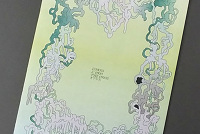
ewige jew poster 2 museum 15222-2301x3200

[Thanks United States Holocaust Museum]


https://youtu.be/cQfAFE0VEgk


[Art Spiegelman writes of this racist Nazi propaganda film, with regard to its influence on his Maus:

The most shockingly relevant anti-Semitic work I found was The Eternal Jew, a 1940 German “documentary” that portrayed Jews in a ghetto swarming in tight quarters, bearded caftaned creatures, and then a cut to Jews as mice – or rather rats – swarming in a sewer, with a title card that said “Jews are the rats” or the “vermin of mankind.” This made it clear to me that this dehumanization was at the very heart of the killing project.
(Spiegelman, 155)

]


Selection


[The following quotes from the English subtitles.]


Their homelessness, though, is a matter of choice, and in keeping with their entire history. Four thousand years ago, their Hebrew ancestors were already wandering. Out of the Land of Two Rivers, they wandered along the sea to Egypt, where they ran a lucrative grain business for a while.

vlcsnap-2015-07-02-16h45m27s911

When the country farmers and other Egyptians... rose against the foreign usurers and speculators, they wandered once more, and plundered their way to the promised land.

vlcsnap-2015-07-02-17h12m23s301

They settled there, mercilessly looting culturally-superior rightful inhabitants. Here in the course of centuries, from the Oriental, Far Eastern racial mixture... with Negroid admixture, the ultimate mongrelized Jews developed.

vlcsnap-2015-07-02-17h13m15s998

Foreign from us Europeans, born of totally-different racial elements, they differ from us in body and above all in soul. 

vlcsnap-2015-07-02-17h17m00s239

We probably would never have been bothered by them had they stayed in their Oriental home. But the cosmopolitan empire of Alexander the Great, reaching from the Near East across half the Mediterranean, and especially the boundless world empire of the Romans, brought about the evolution of the trade and migratory traits of the Jews, who soon spread across the open Mediterranean area.

vlcsnap-2015-07-02-17h17m55s959vlcsnap-2015-07-02-17h19m20s607

While some of them settled in the large urban traffic... and the trade centers of the Mediterranean, others wandered relentlessly on across Spain, France, Southern Germany, and England. Everywhere they made themselves unwelcome. In Spain and France the people rose openly against them in the 13th and 14th Centuries, and they wandered on, mainly to Germany.

vlcsnap-2015-07-02-17h22m08s853vlcsnap-2015-07-02-17h22m20s150

From there they followed the path of the Aryan culture... creative Germans colonizing the East... till they finally found a gigantic new untapped reservoir... in the Polish and Russian sections of Eastern Europe.

vlcsnap-2015-07-02-17h22m31s756

The 19th Century, with its muddled ideas about human equality and freedom, gave the Jews a great lift. From eastern Europe they spread across the entire continent... during the 19th and 20th Centuries, and then across the world.

vlcsnap-2015-07-02-17h25m32s794vlcsnap-2015-07-02-17h25m38s969vlcsnap-2015-07-02-17h25m44s279vlcsnap-2015-07-02-17h25m50s814vlcsnap-2015-07-02-17h26m00s527

Parallel to these Jewish wanderings throughout the world is the migration of...  a similarly restless animal: the rat.

vlcsnap-2015-07-02-17h27m44s582

Rats have been parasites on mankind from the very beginning.

vlcsnap-2015-07-02-17h28m14s150

Their home is Asia, from which they migrated in gigantic hordes...  over Russia and the Balkans into Europe. By the middle of the 18th Century, they'd already spread over all of Europe. 

vlcsnap-2015-07-02-17h28m38s096Toward the end of the 19th Centiry, with growing shipping traffic, they took possession of America as well, and eventually Africa and the Far East.

vlcsnap-2015-07-02-17h30m49s493

Wherever rats turn up, they carry destruction to the land... by destroying mankind's goods and nourishment and spreading diseases and plagues... such as cholera, dysentery, leprosy, and typhoid fever.

Ewige Jew Mice 1

They are cunning. cowardly, and cruel, and usually appear in massive hordes. They represent the elements of sneakiness and subterranean destruction among animals, just as the Jews do among mankind.

vlcsnap-2015-07-02-17h32m19s536

The parasite nation of Judah is responsible for a large part of international crime.

[The above quoted material comes from from around to 13.30 to around 17.30 of the youtube English subs version, or from around to 13.45 to around 18.00 in the archive.org version]


[Consider for comparison some shots from Leni Riefenstahl’s Triumph of the Will (Triumph des Willens, 1935), which documents some of Adolf Hitler’s speeches before the military. Notice the composition in these shots.]

Triumph Wills 1

Triumph Wills 2

[Here the German soldiers are portrayed as perfectly organized in a geometrically rigid and mechanically interrelated structure. Compare that composition to the image from Der Ewige Jude of the chaotic mess of rats.]

Ewige Jew Mice 1


Movie Poster from:

“Der Ewige Jude (The Eternal or Wandering Jew)”. The United States Holocaust Museum.

http://www.ushmm.org/information/press/press-kits/traveling-exhibitions/state-of-deception/der-ewige-jude-the-eternal-or-wandering-jew

Embedded video and subtitles from:

“Der Ewige Jude [ENG SUB].” Uploaded to youtube by Chaîne de LeGuideMoustachu.
https://youtu.be/cQfAFE0VEgk


Screenshots taken from:

“1940 - Der Ewige Jude (1h 05m, 656x560).”
https://archive.org/details/1940-Der-Ewige-Jude


Other quotation from:

Spiegelman, Art [with Hillary Chute (interviewer)]. MetaMaus. New York: Pantheon/Random House, 2011.


6 Jul 2014

Spiegelman. prt A. Opening material of Maus I


by Corry Shores
[
Search Blog Here. Index-tags are found on the bottom of the left column.]

[Central Entry Directory]

[Graphic Literature, entry directory]

[Spiegelman’s Maus, entry directory]


Art Spiegelman


Maus: A Survivor’s Tale, vol.1


Opening material


Summary


Art Spiegelman, the author of Maus, interviews his father, a survivor of Nazi concentration camps. We might think of it as a documentary. It is similar to Claude Lanzmann’s documentary film Shoah (1985) in that neither one gives much direct objective evidential material (like footage or photographs), but both depend rather on subjective testimonial from those who lived through the Holocaust. [from Thompson and Bordwell’s Film History: “Claude Lanzmann's Shoah (1985), a nearly nine hour study of the Nazis' extermination of the Polish Jews, recalls Alain Resnais's Night and Fog in studying bland contemporary landscapes that were the sites of unspeakable cruelty. Here, however, no stock footage takes us into the past; Lanzmann presents | only what he called ‘traces of traces,’ interviews with witnesses, Jewish survivors, and former Nazis.” (582-583)] So we will learn not just about the events but as well about the real human experiences directly affected by them. One interesting difference is that Maus is drawn, which means the experiences are processed subjectively yet again, this time through an artist who will depict affective experiences, rendering the events in his own way. On the one hand, we might see this as a distortion of the actuality of the events and thus a subtraction to its documentary value. However, we said that Shoah demonstrates another sort of documentation, namely, the preservation and communication of emotional and affective experience. In that sense, the cartoon format of Maus may in fact prove just as effective as film. And since cartoon art is known for being able to be more expressive, in that it often shows the inner workings of the characters through expressive outer iconic representations, perhaps the graphic literary medium can be even more effective than film for the purpose of subjective documentation.


Here in this opening material, Spiegelman prepares us for the harsh and dark human truths that his father’s survivor’s tale will teach us. Art is recalling a childhood event when he suffered cruelty from his peers. He was roller-skating with some play-friends, and they race ahead, saying “Last one to the schoolyard is a rotten egg!” Young Art’s skate breaks, and he lands on the sidewalk, hurting his leg. Here the pain is given iconically with the star and line squiggle, accompanied by a distressed look in Art’s face.

1.1.4d

Art goes home crying to his father, who is sawing a plank of wood. After he asks his son why he is crying, Art says:

1.4.2

His father is struck by Art using the term ‘friends’ and he replies:

1.5.4 5

In the rest of the narration, Art is in his middle age, interviewing his father, whose stories are depicted graphically. We will see how Art’s father and other Jews were treated as subhuman, in a sense, like animals or worse. But the Nazi savagery is as well a sort of ‘behaving like animals’. And the Jews were not only treated like animals. They were as well signified as such specifically in propaganda and more generally in the Nazi’s ‘regime of signs.’ Spiegelman’s Maus in a way is like a small machine working in the larger machine of signs and significance, but sending disruptive shockwaves into it. The language is still largely the same. Jews are rodents, and like rodents they are highly vulnerable to predators and they burrow, scurry, and hide in recesses. But Spiegelman keeps all of these meanings that are inferential to the imagery, yet he makes a small but significant change. The Jews are mice and not rats. They have all the powers of other rodents, but not the negative connotations. This could be one way that Spiegelman is overturning the Nazi’s regime of inferences. Rats we might detest, but mice instead are cute and their cartoons can evoke our sympathies. Think of Mickey, for example. Spiegelman inserts practically the same image, following the same rules of representation, but he inverts the imagery’s inferences and affections. As we continue through this great work, we will ask if we might find in Spiegelman’s ‘strategy’ of representation a ‘minorization’ of the major language of Nazi anti-Semitic propaganda. We furthermore will wonder if the graphic literary medium is already poised to play a minorizational role in the larger context of the more established major art forms like film and literature. Lastly, we will wonder if Maus might be an example of ‘becoming-animal’, not superficially because the people are depicted as animals, but in the Guattari and Deleuze sense of preventing fixed significations and inferential values.  When we consider the treatment of the Jews, we can infer from their behavior the implied (and stated) message that Jews are subhuman. But by re-engineering the machinery of their inferential system, Spiegelman reverses the message, seemingly saying that the Nazis, by lacking humanity, would not necessarily fulfill our definitions for a human being, at least morally speaking. This might be ‘becoming animal’ in the sense of evading determinations and refashioning them to produce new inferences.


Spielgelman, Art. Maus: A Survivor’s Tale, vol 1. New York: Pantheon Books, 1986.


Thompson, Kristen, and David Bordwell. Film History: An Introduction. 3rd edition. Boston: McGraw Hill.