Showing posts with label genetics. Show all posts

8 Apr 2009

Innate Tendencies for Wild Heterogeneity: Shepard, Coming Home to the Pleistocene, Ch.8, subsection 8


Paul Shepard

Coming Home to the Pleistocene

Chapter VIII: Wildness and Wilderness

Subsection 8

Innate Tendencies for Wild Heterogeneity


Physiologist Rene Dubos notes that our "human genetic makeup was stabilized about fifty thousand years ago." It is evident now that we have the innate capacity to retain varieties of images, to create a diversity of languages, and to devise continually new inventive ideas. But these abilities suggest that we did not evolve in a homogenized world, as we see in our urban high rises, parking lots, and automated factories. Nonetheless, we culturally adapted to such blank uniformity. Yet genetically our minds are wild. They want color, variation, and heterogeneity. Society and individuals develop many ailments as a result of the tension between our genetic and cultural adaptations.
We have become accustomed to identifying a wide range of physical and social disorders -- everything from war to ethnic intolerance, stress and trauma disorders, epidemic disease, and the vague dissatisfactions that lead to addictions and suicide -- as weaknesses in the social, political, or technological order, rather than as evidence of a deep, ecological dissociation from our genetic core. (148b)


Shepard, Paul. Coming Home to the Pleistocene. Washington, D.C.: Island Press, 1998.

The Wild Within: Shepard, Coming Home to the Pleistocene, Ch.8, subsection 6


Paul Shepard

Coming Home to the Pleistocene

Chapter VIII: Wildness and Wilderness

Subsection 6

The Wild Within


Humans have domesticated many plant and animal species. But in many cases, their wild ancestors have become extinct. So we no longer can compare domestics to wilds in order to see which is which.

Yet many other species have been spared.
Wildness occurs in many places. It is composed of the denizens of wilderness -- eagles, moose, and their botanical coinhabitants and all of the species whose sexual assortment and genealogy have not been controlled or set adrift by human design or captivity. But it also includes those species who have been cohabitants with domestication -- house sparrows, cockroaches, and ourselves. (142c-d)
But domesticated species have undergone "bodily and behavioral degradation." They have been "bred to be passive and to have physical conformities that are 'babylike' and thus appeal to our protective instincts" and show "the destruction of wildness." (142d)

So we ask, what is the wild human? Shepard quotes Lévi-Strauss as saying that wild humans are not savages, rather, they are we ourselves: "mind in its untamed state as distinct from mind cultivated or domesticated for the purpose of yielding a return." (Savage Mind qt 143a) Wildness remains our "generating matrix."
The savage mind is ours! We may be deformed by our circumstances, like obese raccoons or crowded, demented rats, but as a species we have in us the call of the wild. (143b, emphasis mine)
The loss of wildness is the destruction of the other. We have made the wild our prey, but now we are prey to the deep destruction this has brought upon us.
The loss is usually spoken of in terms of ecosystems or the beauty of the world, but for humans, spiritually and psychologically, the true loss is internal. It is our otherness within. (143c)
According to Julia Kristeva, modern civilization's problem of otherness and the self finds its source in self-consciousness. There are two failed solutions:
1. We try transcending the problem by merging with the One or God through meditation, ascetic solitude, and renouncing the physical world: "nature is merely the illusion of a mistaken reality." (143d)
2. We see the world as a reflection of the self. This is the "new insanity" of Narcissus.
Our selfhoods were once intertwined with the landscapes around us. But then the ancient world discovered the psychic self, an internal life versus an outside. This isolated the self and "drove the mechanistic empiricism of the seventeenth century toward 'the conquest of the outside . . . the outside of nature, to be subjugated by science." (qt 144b)

We domesticate and strip nature of her otherness to us. Then we reintegrate this neutered world back into us.
We discovered that our own inner otherness -- fundamentally perceived as a reflection of the outer forms of life -- when bereft of wildness was no longer infinitely mysterious and beautiful and diverse. (144bc)
But consider the hunter. He must imitate the animal in order to hunt it. He turns within himself to find otherness. Within us is an alien aspect, which as well is the otherness of the wild. We are a part of nature's wildness, but we are not the whole. So nature is other to us in the sense that we are not her in her entirety. But she is within us, because we are a part of her.

Hence,
Domestication is a kind of alchemy whose animals reshape the character of people who have tamed them. Remembering that the opposite of wild is not civilized but domesticated, the best in ourselves is our wildness, nourished by the wild world. To be in a community with crops is to feel like a crop, to have the edges all dulled, our diversity muted. (145b)
Domestication has corrupted us. So too has nature-aesthetics. The corporate world cordoned off
parcels of wilderness that restrict the random play of genes, establish a dichotomy of places, and banish wild forms to enclaves where they may be encountered by audiences while the business of domesticating and denuding the planet proceeds. The savage DNA is being isolated and protected as esthetic relics, like the vestiges of tribal peoples.
My wildness, according to this agenda, can be experienced only on reservations called wilderness, but cannot be lived daily in ordinary life. (145c, emphasis mine)
But we should experience our wildness. Our selves grow by incorporating our natural surroundings into our personal identity.
To the indigenous people of the Australian outback the terrain is not a great three-dimensional space, not a landscape, but a pattern of connections lived out by walking between places and performing rites that link the individual in critical life stages to sacred places -- places that become part of an old story told, sung, and walked through over generations. To be so deeply engaged in place and myth is for most of us today a great hunger. (145d)


Shepard, Paul. Coming Home to the Pleistocene. Washington, D.C.: Island Press, 1998.


7 Apr 2009

Sickly UnWild: Shepard, Coming Home to the Pleistocene, Ch.8, subsection 3


Paul Shepard

Coming Home to the Pleistocene

Chapter VIII: Wildness and Wilderness

Subsection 3

Sickly UnWild

To recover our primordiality, we could return to Pleistocene ways of life. Our bodies and minds have been shaped genetically by our original natural landscape. Our optimum environment would then be something like the African savanna.

We recently have become more aware of our genome. Now we accept its central role in human life.
Our hereditary integrity is a reflection of a deep past that continues in us. Our health in the broadest sense depends on it. As we begin to see organic dysfunction and disease as the misfitting of our genome to contemporary environments that we have created, we move away from the notion of war against natural process and against wildness. We are Pleistocene hominids keyed with infinite exactitude to small-group, omnivorous life in forest/plains edges of the wilderness. (136-137)
Many of us suffer from diets not fitting to our genes.
We face decrepitude of body and spirit caused by sedentism, the psychoses of overdense populations, failed ontogenies, and cosmologies that yield havoc because they demand control over, rather than compliance with, the wild world -- cosmologies based on the centralized model of the barnyard. (137b)
Recently humanity has pushed for health awareness and improvement. We feel alienated from our natural way of life.
Most of us remain unaware that the remote world of the "ice ages" is where the criteria were established that determine whether our medical therapies are successful and whether we truly understand what recovery means. (137b)


Shepard, Paul. Coming Home to the Pleistocene. Washington, D.C.: Island Press, 1998.


We're Wild Inside: Shepard, Coming Home to the Pleistocene, Ch.8, subsection 1


Paul Shepard

Coming Home to the Pleistocene

Chapter VIII: Wildness and Wilderness

Subsection 1

We're Wild Inside


There is a difference between wildness and wilderness.
Wildness is a genetic state. Wilderness is a place we have dedicated to that wildness, both in ourselves and in other species. The home of our wildness is both etymologically and biologically wilderness. Although we define ourselves in terms of nationality, race, profession, and so on, it is evident that the context of our being in the past is wilderness -- to which, one might say, our genes look expectantly for those circumstances that are their optimal ambiance, a genetic expectation of our genome that is unfulfilled in the world we have created. (131b-c, emphasis mine)
We are currently developing technologies that will allow us some day to identify and perhaps eliminate deleterious genes from the human genome. We pursue this genetic research out of a drive for total health and perfect crops. However, "at a less conspicuous level this research is also defining the genetic basis and reality of the 'normal' or optimal human individual" (131d) [see Siep's article for further discussion.] Studies are showing that human traits we for long thought to be learned through culture and education are really inherited genetically.
At last we approach the hard truth: being human is heritable. (131d)
Even if we are born and raised in the wilderness, we still have all our human traits. So to what extent are we wild creatures?

Contemporary Western culture regards the wilderness as a beneficial realm of purification. It provides us "solace, naturalness, nearness to a kind of literary, spiritual esthetic, or to unspecified metaphysical forces, escape from urban stench, access to ruminative solitude, and locus of test, trial, and special visions." But all these valuations derive from prior traditions. Really we never left the wilderness.
True, wilderness is something we escape to, a departure into a kind of therapeutic land or sea, a release from our crowded and overbuilt environment, healing to those who sense the presence of the disease of tameness. We think of wilderness as a place, a vast uninhabited home of wild things. It is also another kind of place. It is that genetic aspect of ourselves that spatially occupies every body and every cell. To "go into" that wilderness is something we do constantly. We are immersed in it. Our consciousness and our culture buzz around it like tiny lights, not illuminating a great darkness but drawing energy that makes a self possible. (132c, emphasis mine)
To better grasp the nature of our wildness, we should contrast it with the concept of "domestication."
"Domestic" means a "breed" or "variety" created by the deliberate manipulation of a plant or animal population's reproduction by humans with a conscious objective. We ourselves are genetically wild rather than domesticated. (132c, emphasis mine)
We further distinguish "tame" from "domestic."
We are also tame, for almost any animal can be conditioned to accept the human environment, domestic or not. The tameness of captive wild animals is like our own tameness: it is conditioned to appropriate behavior in the household. Our tameness not our domestication, makes us at home in domesticated landscapes, in the sedentary life surrounded by household artifacts and the romance of the hearth and homestead, restraints in the interest of civic order that cloud the definition of "domestic." None of these affects the human genome and therefore it is wildness. (132-133, emphasis mine)
We are tamed. But that does not change our genes. They have retained their wild tendencies.

When we domesticate plants and animals through selective breeding, we also produce rapid genetic changes that exaggerates both selected traits and unintended ones as well. One gene might cause deleterious characteristics. Yet it might also be a part of a more complex web of interacting genes that function "like a safety net." For example, someone might have a gene bearing a recessive trait that makes him more prone to a certain disease. And yet he will be immune. For, other dominant genes protect him.

We have also selectively bred plants to bring out desired traits. Often this is done by pairing recessive genes. In doing so, the plant becomes less adaptable to its living conditions. We then need to compensate by taking extra care of the plant using artificial means. In other words, domesticating plants and animals weakens their genes and makes them more dependent on artificial human interventions.

We live in artificial structures that we designed and built for ourselves. But we also have selected certain plants to occupy our surroundings. We have chosen certain breeds of grasses and, grains. Even such 'weeds' as dandelions are "successional forms" of these chosen breeds. The human landscape seems durable. But this is an illusion. It is not in ecological equilibrium. Rather, it is an "ecological suppression caused by human and domestic animal pressures." (133bc) And yet, at the margins of the domesticated ecosystems are vegetation, microorganisms, insects, and animals that maintain their wildness. They do not need artificial support.
None is bound strictly to the mosaic of domestic plants and animals in order to survive in the way that domestic life forms are. (133c)
These domesticated landscapes cause us unease. We worry that such homogenization and artificiality threaten our well-being.
The radical implication is that we, like the other wild inhabitants, may actually be less healthy in the domesticated environments than in those wild landscapes to which our DNA remains tuned. (133d, emphasis mine)
We often find rural landscapes beautiful. This is probably because they "superficially resemble the savannas of our evolution." (133d)

But even these agrarian regions are not truly wild.
Our domesticated surroundings are human inventions -- the results of empirical technology over the past ten millennia and scientific technology during the past three hundred years. (134a)
But even though we have become accustomed to our domesticated surroundings, our human potential is better actualized in the wilderness where our wild genes belong, "where we are realized as mature individuals and communities of generous and peaceful character." (134b)

In fact, we cannot live without the wilderness.
Modern life conceals our inherent need for diverse, wild, natural communities, but it does not alter that need. (134b, emphasis mine)
So we become deprived of our essential need for wilderness. We see symptoms of that deprivation as the prevalence of psychic stress and social disorder. And we pretend that we do not need the wild. This is our "universal act of modern denial."

One mistaken belief about the human species is that we can survive even if our environment changes drastically. The dinosaurs could not. So they became extinct. But we are a "generalized" species that will outlast all the other ones that are too "specialized." (134c)

We delude ourselves in these ways. At the height of our self-deception is our belief that the human brain, "the magic means of our intelligence and mastery, is the instrument of our exception from the biology that has burdened and exterminated so many other species." (135cd)

But this very same human brain has "scarified" whatever new ecosystem it migrated into.
What was a good (and very highly specialized) brain for positioning a terrestrial primate in a Pleistocene niche is evidently maladapted for life in the throes of its own glut of people and barrenness of nature. (134d)
Thus we are not a generalized species: "human ontogeny -- the intricately structured, human life cycle -- is, like our central nervous systems, a delicately equilibrated biological complex." (134-135) We have for long thought ourselves to be universally adaptable to all environments. Really, we have adapted the environment to us, so to create ecological prosthetics that compensate for our genetic deficiencies. And doing so is not merely making the world more hospitable. Our alterations to the ecosystem now threaten to completely alter the ecological balance of the whole globe. The 21st century will probably bring us to the brinks of our adaptability. We will find that our bodies and minds can only adapt so much to a changing environment. But we will also learn that our culture is perfectly flexible to be able to adapt any which way it needs. What will guide these cultural changes will be the ways our cultural choices reward and punish us according to our "given natures." Our genome evolved as part of a very specific ecosystem, the African savanna. This genome kept us in its proper subsystem for three million years. It was only ten thousand years ago that culture really started to "evolve" away from our genome. During this agricultural revolution, we stopped being hunter-gathers and instead began the systematic husbandry of animals and plants. But although we domesticated many natural species, we spared ourselves from this genetic pruning. Homo sapiens has not evolved an "agrarian" genome. We are still hunters. We are still wild. So we can expect that if the modern form of our cultural heritage begins to threaten the species, we will return to a life more suitable to our genes.


Shepard, Paul. Coming Home to the Pleistocene. Washington, D.C.: Island Press, 1998.

6 Apr 2009

Our Eyes of Child: Shepard, Coming Home to the Pleistocene, Ch.3, subsection 2


Paul Shepard

Coming Home to the Pleistocene

Chapter III: How We Once Lived

Subsection 2

Our Eyes of Child


Our evolution was a gradual adaptation to wild life on the African savanna.
Our bodies are niche-fixed, defined by the characteristic features of our ecology in the strict sense of the word -- that is, the energy and symbiotic patterns and demographics of our genus, Homo, as they have existed for perhaps two million years. (38c)
Our genome was shaped by our environment. And our culture is guided by our genome.
Because of our evolutionary past and the extraordinary way life has shaped our mind and bodies, we are required by the genome to proceed along a path of roles, perceptions, performances, understanding, and needs, none of which is specifically detailed by the genome but must be presented by culture. Mentally and emotionally, children, juveniles, and adolescents move through a world that is structured around them following a time-layered sequence of mother and other caregivers, nature, and cosmos. (39a)
Childhood is humanity's most crucial experience. Children obtain social bonds. They explore the non-human world, learning its names and identifications. The child learns speech, but "nature is the child's tangible basis upon which symbolic meanings will be posited." Many of our metaphorical meanings we use through adulthood are based on our naming and recognizing plants and animals during childhood.
The ability to read the landscape or the environment, later in life, grows from establishing natural things as its anatomy, keys to the wholeness and well-being of the habitat. (39d)
Children undergo bodily changes such as tooth eruptions, growth spurts, or personality changes. All the while, culture responds appropriately in a way "that is analogous to the optimal environmental conditions necessary for a butterfly to emerge from a chrysalis." (40b)

Consider how some of us obtain our wisdom teeth in adulthood. Normally we teethe in childhood. But the human species exhibits many traits in adulthood that are proper to child development.
This is called "neoteny," and it bound-up with the way we relate to our environment.
Neoteny, the immaturity factor, is intimately associated early in life with a topographic intuition -- that is, place in consciousness as an aspect of one's own body and physiognomy. Early correlation in human subconsciousness between body and earth, as the child and then the youth explores and wanders through his or her home range, is basic to future visualizing of nonphysical reality and cosmological "places." (40b)


Shepard, Paul. Coming Home to the Pleistocene. Washington, D.C.: Island Press, 1998.

Shepard, Entry Directory, Coming Home to the Pleistocene


by
Corry Shores
[Search Blog Here. Index-tags are found on the bottom of the left column.]

[Central Entry Directory]
[Primitivism, Entry Directory]


Paul Shepard

5 Apr 2009

Bateson and the Meta-Random in "Effects of Conscious Purpose on Human Adaptation"


by Corry Shores
[Search Blog Here. Index-tags are found on the bottom of the left column.]

[Central Entry Directory]
[Gregory Bateson, Entry Directory]


Gregory Bateson

Steps to an Ecology of Mind

"Effects of Conscious Purpose on Human Adaptation"


Bateson prepared this essay for the 1968 Wenner-Gren conference on "Effects of Conscious Purpose on Human Adaptation."

Recent findings in cybernetics and systems theory sheds new light on such well-known topics as progress, learning, and evolution.

This conference focuses on consciousness' role in adaptation.

Bateson will address three cybernetic or homeostatic systems:
A) the individual human organism,
B) the human society, and
C) the larger ecosystem.

We will consider consciousness as a coupling agent in these systems.

Consciousness processes information. Science wonders if it is enough for human adaptation.
It may well be that consciousness contains systematic distortions of view which, when implemented by modern technology, become destructive of the balances between man, his society and his ecosystem. (415c)
Bateson now offers nineteen considerations to help us address this question.


(1) There are biological and evolving systems, such as individual organisms, animal and human societies, ecosystems and so forth. All of these consist of complex cybernetic networks. And they all share certain formal traits:
A) A subsystem may be regenerative if it could 'runaway' exponentially, as for example with arms races. All biological and evolving systems contain subsystems that are potentially regenerative.
B) Normally they are kept in check by governing loops that help maintain homeostasis. These maintenance systems are called conservative because "they tend to conserve the truth of propositions about the values of their component variables -- especially they conserve the values of those variables which otherwise would show exponential change." Governed sub-systems are homeostatic, because "the effects of small changes of input will be negated and the steady state maintained by reversible adjustment." (416a.b)


(2) In biological and ecological systems, the constancy of one variable is maintained by changing other variables.

Bateson has us consider an engine governor. A simple example is James Watt's conical pendulum governor. [Image 1]


As the motor spins faster, the pendulums swing upward. This causes the lever-switch to move downward. It decreases the fuel, so that the motor spins slower. [2]


As the motor slows, the pendulums swing downward. If they get too low from the motor moving too slow, they lift the fuel lever up, to speed the motor again. The motor's speed is a complex variable. And it is regulated by the changing variations in the pendulum's motion. [3]


Similarly, survival is such a complex variable. Its constancy is maintained by the changing evolutionary variations (mutations) that lend to the species' ability to perpetuate.
The same logic also applies to learning, social change, etc. The ongoing truth of certain descriptive propositions is maintained by altering other propositions. (416c)

(3) Some systems contain numerous interconnected homeostatic loops. External impacts may create changes in isolated parts of such systems. So consider for example that one variable V1 depends on the governing variations of V2 and V3. When an external impact changes V1, then V2 and V3 will change in order to maintain the stability of V1. However, if V2 and V3 are also homeostatic systems, then they rely on the governing variations of V4 and V5. And these rely upon V6 and V7, and so on. Thus to alter one homeostatic systems among other interconnected ones is to set a chain reaction of alterations through the whole network.


(4) This is the phenomenon of "spreading change." Broadly speaking, it is a variety of learning. When a system becomes acclimated to new factors, or when it becomes addicted to them, it undergoes this process. The original external impact creates a far-reaching change through the homeostatic systems. This is the first order homeostasis that neutralizes the immediate effects of the original external impact. But if that impacting factor continues to impose, then the system will become dependent upon its continual presence.

Bateson offers the example of the Alcohol Prohibition in the United States. The social system reacted homeostatically so to maintain the alcohol supply's constant flow. Hence variations were made in society's system of professions. Some took-up a new type of job: bootlegging. But this variation required there be variations in other systems to control it. So the policing system adapted to create anti-bootlegging units and strategies. These corrective systems became established parts of the modified system. Then, when people began considering a repeal of the prohibition law, the bootleggers and police stood in favor of keeping the law in place. (417a)


(5) From these observations we can see that biological changes conserve stasis, and learning is aversive. Consider a rat whose body is changing as it becomes hungry. It is 'rewarded' with food that neutralizes the changes hunger brings upon its body. The 'internal change' is a pain, which is a sort of punishment. The reward is the external event of obtaining food. This difference between reward and punishment is based on a somewhat arbitrary line that we draw so to delimit a subsystem we call the 'individual.' There is an internal subsystem in the rat who undergoes the punishment and reward. Its learning how to obtain rewards averts punishment and conserves biological stasis. (417b)


(6) Consciousness and self are closely related ideas that perhaps are related to "genotypically determined premises of territory." We noted above that there is a mostly arbitrary line that delimits the individual by defining the logical difference between the reward and punishment it undergoes. Consciousness and self, then, are "crystallized" by this arbitrary line. We may consider the individual as a "servosystem," like the governed engine, that is coupled with its environment. Under this light, "the whole appearance of adaptation and purpose changes." (417c)


(7) In the first enumeration, we discussed runaway regenerative circuits. Extreme cases of change will cause the exponential escalations of such subsystems. And yet it can happen without causing total destruction to the whole system. While in other cases, the "slippage along exponential curves" will stop as soon as the system breaks down. But other factors may stop the destructive process before it takes the whole system down. However, this limiting factor might itself do harm to the system. So consider a population of healthy individuals that have become too numerous. One might think that the growth could be limited by decreasing the food supply. But doing so will cause harm to the health of the starvation's survivors. And it will do irreparable damage to the unused farmland by overgrazing, for example. Hence, homeostatic controls should not themselves be harmful.


(8) So the coupling of self-corrective systems presents certain problems. But these problems are vital for human adaptation to our societies and ecosystems. Lewis Carroll's humorous representation of games highlights "the nature and order of randomness created by the inappropriate coupling of biological systems." (418b) Consider a game involving randomness, for example, like Rock, Paper, Scissors, or a similar game, Matching Pennies. Here there are a finite set of possibilities. Either
a) both players have heads,
b) both have tails,
c) player one has heads and player two has tails, or
d) player one has tails and player two has heads.
There is no possibility of going outside this set of possibilities. However, if there was always the possibility of going beyond the known set of alternatives, then the game would involve meta-randomness.

Carroll illustrates this meta-randomness through the imperfect coupling of biological systems in the Queen's Croquet Game. The balls are curled hedgehogs. And Alice is coupled with a flamingo, serving as her uncooperative croquet mallet.
The 'purposes' (if we may use the term) of these contrasting biological systems are so discrepant that the randomness of play can no longer be delimited with finite sets of alternatives, known to the players. (418c, emphasis mine)
Alice cannot get the flamingo to keep its neck straight so she can strike the hedgehog ball. She does not understand the flamingo. Put another way, "she does not have the systemic information about the 'system' which confronts her." (418cd) Likewise, the flamingo does not understand Alice's system. So they stand at "cross-purposes." Now, we are already integrated into our surrounding biological systems, even before we are conscious of it. So if our consciousness does not grasp the systems we are coupled-to, then we will be playing the Queen's Croquet.
The problem of coupling man through consciousness with his biological environment is comparable. If consciousness lacks information about the nature of man and the environment, or if the information is distorted and inappropriately selected, then the coupling is likely to generate a meta-random sequence of events. (418d, emphasis mine)

(9) Consciousness does not exist outside human biological systems. It affects our environmental systems.
it is not a mere collateral resonance without feedback into the system, an observer behind a one-way mirror, a TV monitor which does not itself affect the programme. (418-419)
Consciousness sends feedback through the remainder of our mind. Hence it has an effect on our actions. Yet, we do not yet understand this feedback. We must urgently investigate it.


(10) What we do know already is that
the content of consciousness is no random sample of reports on events occurring in the remainder of mind. Rather, the content of the screen of consciousness is systematically selected from the enormously great plethora of mental events. (419a)
However, we do not yet know what preferences or rules govern the selection of mental events to appear on consciousness' screen. We need to investigate not merely this issue, but also the limitations of verbal language.


(11) In fact, it seems that what selects the content is strongly related to 'purpose,' 'attention,' and similar phenomena. We still know little about these things too, hence we must investigate them as well. (419b)


(12) So consciousness sends feedback through the rest of the mind. And, consciousness deals with just a "skewed sample" of all the mind's events. Let's consider these two factors. Consciousness not only influences what the rest of the mind thinks. It also determines what it pays attention-to in the mind. It's particular selection will then send feedback through the rest of the mind again, influencing the content. And then it will again select what it wants, influence the rest, select again, and so on. Imagine that a microphone runs-away exponentially into sound feedback. It begins with a sound frequency. The amplifier sends it back. The microphone picks it up again. And it is sent back even louder. What we come to hear sounds nothing like the original sounds. However, it finds no origin but in those sounds and their resonances. So the feedback loop selects a frequency from an original soundscape, and distorts that sonic picture through its selective repetition of just one part of it. In a similar way, our minds have this effect. They select what they want from a mass of contents in our mind. That amplifies some select content. This amplified content resonates through the rest of our mind. Then consciousness selects from that resonating mass what it wants to focus-on. Again that sends an influencing resonance. What is in the content of our mind are conceptions of our selves and of the world around us. The consequence of this mental feedback loop, then, is a distorted sense of ourselves and our environment.
If consciousness has feedback upon the remainder of the mind (9 above), and if consciousness deals only with a skewed sample of the events of the total mind, then there must exist a systematic (i.e., non-random) difference between the conscious views of self and the world, and the true nature of self and the world. Such a difference must distort the processes of adaptation. (419bc)

(13) As a result of the consciousness feedback loop, there is a profound difference between the way we evolve genetically and culturally. We consider first the Weismann barrier. If we change our genetic code, then it will change our physiological characteristics. However, if we change our physiology, that does not change our genetic code. A man might have had all his limbs amputated. But he will continue to bear offspring with their arms and legs intact and fully developed. However, it is conceivable that we may mutate the genetic code of reproductive cells so to cause the offspring to be born without limbs. Genes affect bodies. But bodies do not affect genes.

Things are different for the relation between cultural evolution and consciousness, and between learning and consciousness. Culture affects the way our minds develop. But our minds affect the way culture develops. Likewise for learning. Our minds are shaped by learning. But what we learn and how we learn it (along with what we teach) are shaped by our minds.
In cultural evolution and individual learning, the coupling through consciousness is present, incomplete and probably distortive. (419c)

(14) This distortion tends to prevent us from seeing how we are integrated into the systems around us.
It is suggested that the specific nature of this distortion is such that the cybernetic nature of self and the world tends to be imperceptible to consciousness, insofar as the contents of the 'screen' of consciousness are determined by considerations of purpose. (419d)
We may formulate the argument of purpose as follows.
1) D is desirable.
2) B leads to C.
3) C leads to D. So,
4) D can be achieved by way of B and C.
But perhaps the systemic nature of the whole mind and its outer world do not operate according to such a linear structure. So to force it upon them could blind us from the "cybernetic circularities of the self and the external world." (419-420). Our consciousness is selective. It only samples limited sets of data. These "will not disclose whole circuits but only arcs of circuits, cut off from their matrix by our selective attention." (420a) So, if we want to change variable B to obtain D by means of a linear mediation through C, then we will probably be ignorant of the circularly structured systems that we and our objectives are a part of.
the attempt to achieve a change in a given variable, located either in self or environment, is likely to be undertaken without comprehension of the homeostatic network surrounding that variable. (420a)
But in points (1) through (7), we described the properties of such homeostatic networks. So purposive behavior would ignore all these considerations. Hence it is wise to correct this narrow purposive view.


(15) Consciousness serves to couple man and his surrounding homeostatic systems in a particular way. But this is not a new discovery. However, we see how urgent it is to investigate this phenomenon.


(16) One cause for this urgency is man's habit of changing his environment rather than himself. Consider this situation. Organisms must maintain a certain bodily temperature range. If it changes, the organism may either make changes within itself or outside itself in the external environment. "It may adapt to the environment or adapt the environment to itself." Throughout evolutionary history, organisms have usually changed internally to adapt to environmental alterations. Or, they may do both in a way. They could migrate to a new climate, and adapt to its particular conditions. And in select cases, organisms do create "modified micro-environments." Take for example concentrated conifer forests [4]


Fungal colonies [5]


Wasp nests [6]


And bird nests [7]

These are cases where the "logic of evolutionary progress is towards ecosystems which sustain only the dominant, environment-controlling species, and its symbionts and parasites." (420c)
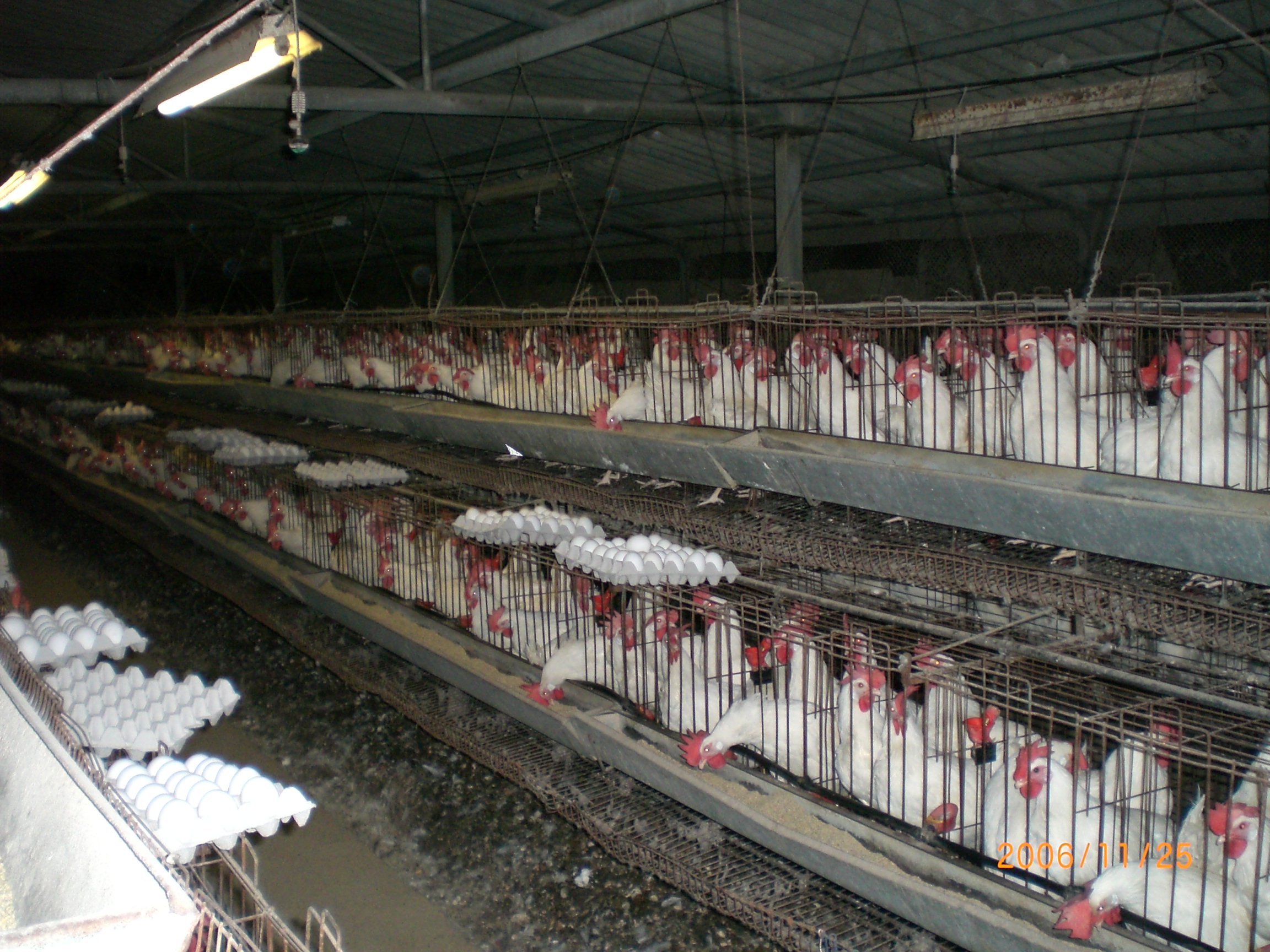
Humans far surpass all other species as environment modifiers. Our single-species ecosystems are our cities. [7.5]


In fact, we also create single-species environments for our symbionts. For example, cornfields [8]


Industrial bacteria cultures [9]


Batteries of fowls [10]


Laboratory mouse or rat colonies [11]


(17) Up to the late 19th century, there was a margin of power-balance between purposive consciousness and the environment. Since then, however, it has altered dramatically. And the rate of its change increases rapidly as technology advances.
Conscious man, as a changer of his environment, is now fully able to wreck himself and that environment -- with the very best of conscious intentions. (421a)

(18) Our mind is normally a homeostatic system. So other corrective processes usually balance the disruptions and distortions of conscious purpose. However, in the last century or so, a certain sociological phenomenon has begun to threaten that balance. Our modern societies have given the legal status of purpose to such "self-maximalizing entities" as trusts, corporations, political parties, unions, nations, and so forth. But biologically speaking, they are not persons at all. They are merely aggregates of parts of persons.
When Mr Smith enters the board room of his company, he is expected to limit his thinking narrowly to the specific purposes of the company or to those of that part of the company which he 'represents'. Mercifully it is not entirely possible for him to do this and some company decisions are influenced by considerations which spring from wider and wise parts of the mind. But ideally, Mr Smith is expected to act as a pure, uncorrected consciousness -- a dehumanized creature. (421b-c)

(19) There are, however, corrective factors. They are "areas of human action which are not limited by the narrow distortions of coupling through conscious purpose and where wisdom can obtain." (421c)

(a) The most important corrective factor is love. Consider Martin Buber's classification of interpersonal relations. "I-Thou" relations are different from "I-It" relations. The normal pattern of human interaction toward inanimate objects characterizes "I-Thou" relationships. However, in "I-It" relations, purpose is more important than love. But "I-Thou" relations should be possible between man, society, and the ecosystem.

(b) Other corrective systems are the arts, poetry, music, and the humanities. They involve more parts of the mind than consciousness will admit.
The heart has reasons which the reason cannot know.

Le coeur a ses raisons que la raison ne connaît point.

(c) "Contact between man and animals and between man and the natural world breeds, perhaps -- sometimes -- wisdom." (422a)

(d) Religion also serves as such a corrective factor.


(20) Bateson concludes by quoting from the Book of Job. to help us remember that "Job's narrow piety, his purposiveness, his common sense and his worldly success are finally stigmatized." God's voice speaks to Job from a whirlwind, explaining why Job must learn his dependent place among all the other creatures. And he must accept that so much of nature will have reasons he can never understand, but nonetheless he must acknowledge their rightful superiority to humanity. Job and the rest of the human species lives in a complex ecosystem. No matter how advanced our knowledge, we cannot extricate ourselves from nature. If we do have any purpose, it is merely to keep our subsystem circulating in support of the larger ecosystem.


From
Bateson, Gregory. "Effects of Conscious Purpose on Human Adaptation." in Steps to an Ecology of Mind. London: Granada Publishing, 1972.

Images from:

[1]

[2]

[3]

[4]

[5]

[6]

[7]

[7.5]

[8]

[9]

[10]

[11]