by Corry Shores
[Search Blog Here. Index-tags are found on the bottom of the left column.]
[Central Entry Directory]
[Gregory Bateson, Entry Directory]
Gregory Bateson
Steps to an Ecology of Mind
"Effects of Conscious Purpose on Human Adaptation"
Bateson prepared this essay for the 1968 Wenner-Gren conference on "Effects of Conscious Purpose on Human Adaptation."
Recent findings in cybernetics and systems theory sheds new light on such well-known topics as progress, learning, and evolution.
This conference focuses on consciousness' role in adaptation.
Bateson will address three cybernetic or homeostatic systems: A) the individual human organism,
B) the human society, and
C) the larger ecosystem.
We will consider consciousness as a coupling agent in these systems.
Consciousness processes information. Science wonders if it is enough for human adaptation.
It may well be that consciousness contains systematic distortions of view which, when implemented by modern technology, become destructive of the balances between man, his society and his ecosystem. (415c)
Bateson now offers nineteen considerations to help us address this question.
(1) There are biological and evolving systems, such as individual organisms, animal and human societies, ecosystems and so forth. All of these consist of complex cybernetic networks. And they all share certain formal traits:
A) A subsystem may be regenerative if it could 'runaway' exponentially, as for example with arms races. All biological and evolving systems contain subsystems that are potentially regenerative.
B) Normally they are kept in check by governing loops that help maintain homeostasis. These maintenance systems are called conservative because "they tend to conserve the truth of propositions about the values of their component variables -- especially they conserve the values of those variables which otherwise would show exponential change." Governed sub-systems are homeostatic, because "the effects of small changes of input will be negated and the steady state maintained by reversible adjustment." (416a.b)
(2) In biological and ecological systems, the constancy of one variable is maintained by changing other variables.
Bateson has us consider an engine governor. A simple example is James Watt's conical pendulum governor. [Image 1]
As the motor spins faster, the pendulums swing upward. This causes the lever-switch to move downward. It decreases the fuel, so that the motor spins slower. [2]
As the motor slows, the pendulums swing downward. If they get too low from the motor moving too slow, they lift the fuel lever up, to speed the motor again. The motor's speed is a complex variable. And it is regulated by the changing variations in the pendulum's motion. [3]

Similarly, survival is such a complex variable. Its constancy is maintained by the changing evolutionary variations (mutations) that lend to the species' ability to perpetuate.
The same logic also applies to learning, social change, etc. The ongoing truth of certain descriptive propositions is maintained by altering other propositions. (416c)
(3) Some systems contain numerous interconnected homeostatic loops. External impacts may create changes in isolated parts of such systems. So consider for example that one variable V1 depends on the governing variations of V2 and V3. When an external impact changes V1, then V2 and V3 will change in order to maintain the stability of V1. However, if V2 and V3 are also homeostatic systems, then they rely on the governing variations of V4 and V5. And these rely upon V6 and V7, and so on. Thus to alter one homeostatic systems among other interconnected ones is to set a chain reaction of alterations through the whole network.
(4) This is the phenomenon of "spreading change." Broadly speaking, it is a variety of learning. When a system becomes acclimated to new factors, or when it becomes addicted to them, it undergoes this process. The original external impact creates a far-reaching change through the homeostatic systems. This is the first order homeostasis that neutralizes the immediate effects of the original external impact. But if that impacting factor continues to impose, then the system will become dependent upon its continual presence.
Bateson offers the example of the Alcohol Prohibition in the United States. The social system reacted homeostatically so to maintain the alcohol supply's constant flow. Hence variations were made in society's system of professions. Some took-up a new type of job: bootlegging. But this variation required there be variations in other systems to control it. So the policing system adapted to create anti-bootlegging units and strategies. These corrective systems became established parts of the modified system. Then, when people began considering a repeal of the prohibition law, the bootleggers and police stood in favor of keeping the law in place. (417a)
(5) From these observations we can see that biological changes conserve stasis, and learning is aversive. Consider a rat whose body is changing as it becomes hungry. It is 'rewarded' with food that neutralizes the changes hunger brings upon its body. The 'internal change' is a pain, which is a sort of punishment. The reward is the external event of obtaining food. This difference between reward and punishment is based on a somewhat arbitrary line that we draw so to delimit a subsystem we call the 'individual.' There is an internal subsystem in the rat who undergoes the punishment and reward. Its learning how to obtain rewards averts punishment and conserves biological stasis. (417b)
(6) Consciousness and self are closely related ideas that perhaps are related to "genotypically determined premises of territory." We noted above that there is a mostly arbitrary line that delimits the individual by defining the logical difference between the reward and punishment it undergoes. Consciousness and self, then, are "crystallized" by this arbitrary line. We may consider the individual as a "servosystem," like the governed engine, that is coupled with its environment. Under this light, "the whole appearance of adaptation and purpose changes." (417c)
(7) In the first enumeration, we discussed runaway regenerative circuits. Extreme cases of change will cause the exponential escalations of such subsystems. And yet it can happen without causing total destruction to the whole system. While in other cases, the "slippage along exponential curves" will stop as soon as the system breaks down. But other factors may stop the destructive process before it takes the whole system down. However, this limiting factor might itself do harm to the system. So consider a population of healthy individuals that have become too numerous. One might think that the growth could be limited by decreasing the food supply. But doing so will cause harm to the health of the starvation's survivors. And it will do irreparable damage to the unused farmland by overgrazing, for example. Hence, homeostatic controls should not themselves be harmful.
(8) So the coupling of self-corrective systems presents certain problems. But these problems are vital for human adaptation to our societies and ecosystems. Lewis Carroll's humorous representation of games highlights "the nature and order of randomness created by the inappropriate coupling of biological systems." (418b) Consider a game involving randomness, for example, like Rock, Paper, Scissors, or a similar game, Matching Pennies. Here there are a finite set of possibilities. Either a) both players have heads,
b) both have tails,
c) player one has heads and player two has tails, or
d) player one has tails and player two has heads.
There is no possibility of going outside this set of possibilities. However, if there was always the possibility of going beyond the known set of alternatives, then the game would involve meta-randomness.
Carroll illustrates this meta-randomness through the imperfect coupling of biological systems in the Queen's Croquet Game. The balls are curled hedgehogs. And Alice is coupled with a flamingo, serving as her uncooperative croquet mallet.
The 'purposes' (if we may use the term) of these contrasting biological systems are so discrepant that the randomness of play can no longer be delimited with finite sets of alternatives, known to the players. (418c, emphasis mine)
Alice cannot get the flamingo to keep its neck straight so she can strike the hedgehog ball. She does not understand the flamingo. Put another way, "she does not have the systemic information about the 'system' which confronts her." (418cd) Likewise, the flamingo does not understand Alice's system. So they stand at "cross-purposes." Now, we are already integrated into our surrounding biological systems, even before we are conscious of it. So if our consciousness does not grasp the systems we are coupled-to, then we will be playing the Queen's Croquet.
The problem of coupling man through consciousness with his biological environment is comparable. If consciousness lacks information about the nature of man and the environment, or if the information is distorted and inappropriately selected, then the coupling is likely to generate a meta-random sequence of events. (418d, emphasis mine)
(9) Consciousness does not exist outside human biological systems. It affects our environmental systems.
it is not a mere collateral resonance without feedback into the system, an observer behind a one-way mirror, a TV monitor which does not itself affect the programme. (418-419)
Consciousness sends feedback through the remainder of our mind. Hence it has an effect on our actions. Yet, we do not yet understand this feedback. We must urgently investigate it.
(10) What we do know already is that
the content of consciousness is no random sample of reports on events occurring in the remainder of mind. Rather, the content of the screen of consciousness is systematically selected from the enormously great plethora of mental events. (419a)
However, we do not yet know what preferences or rules govern the selection of mental events to appear on consciousness' screen. We need to investigate not merely this issue, but also the limitations of verbal language.
(11) In fact, it seems that what selects the content is strongly related to 'purpose,' 'attention,' and similar phenomena. We still know little about these things too, hence we must investigate them as well. (419b)
(12) So consciousness sends feedback through the rest of the mind. And, consciousness deals with just a "skewed sample" of all the mind's events. Let's consider these two factors. Consciousness not only influences what the rest of the mind thinks. It also determines what it pays attention-to in the mind. It's particular selection will then send feedback through the rest of the mind again, influencing the content. And then it will again select what it wants, influence the rest, select again, and so on. Imagine that a microphone runs-away exponentially into sound feedback. It begins with a sound frequency. The amplifier sends it back. The microphone picks it up again. And it is sent back even louder. What we come to hear sounds nothing like the original sounds. However, it finds no origin but in those sounds and their resonances. So the feedback loop selects a frequency from an original soundscape, and distorts that sonic picture through its selective repetition of just one part of it. In a similar way, our minds have this effect. They select what they want from a mass of contents in our mind. That amplifies some select content. This amplified content resonates through the rest of our mind. Then consciousness selects from that resonating mass what it wants to focus-on. Again that sends an influencing resonance. What is in the content of our mind are conceptions of our selves and of the world around us. The consequence of this mental feedback loop, then, is a distorted sense of ourselves and our environment.
If consciousness has feedback upon the remainder of the mind (9 above), and if consciousness deals only with a skewed sample of the events of the total mind, then there must exist a systematic (i.e., non-random) difference between the conscious views of self and the world, and the true nature of self and the world. Such a difference must distort the processes of adaptation. (419bc)
(13) As a result of the consciousness feedback loop, there is a profound difference between the way we evolve genetically and culturally. We consider first the Weismann barrier. If we change our genetic code, then it will change our physiological characteristics. However, if we change our physiology, that does not change our genetic code. A man might have had all his limbs amputated. But he will continue to bear offspring with their arms and legs intact and fully developed. However, it is conceivable that we may mutate the genetic code of reproductive cells so to cause the offspring to be born without limbs. Genes affect bodies. But bodies do not affect genes.
Things are different for the relation between cultural evolution and consciousness, and between learning and consciousness. Culture affects the way our minds develop. But our minds affect the way culture develops. Likewise for learning. Our minds are shaped by learning. But what we learn and how we learn it (along with what we teach) are shaped by our minds.
In cultural evolution and individual learning, the coupling through consciousness is present, incomplete and probably distortive. (419c)
(14) This distortion tends to prevent us from seeing how we are integrated into the systems around us.
It is suggested that the specific nature of this distortion is such that the cybernetic nature of self and the world tends to be imperceptible to consciousness, insofar as the contents of the 'screen' of consciousness are determined by considerations of purpose. (419d)
We may formulate the argument of purpose as follows.
1) D is desirable.
2) B leads to C.
3) C leads to D. So,
4) D can be achieved by way of B and C.
But perhaps the systemic nature of the whole mind and its outer world do not operate according to such a linear structure. So to force it upon them could blind us from the "cybernetic circularities of the self and the external world." (419-420). Our consciousness is selective. It only samples limited sets of data. These "will not disclose whole circuits but only arcs of circuits, cut off from their matrix by our selective attention." (420a) So, if we want to change variable B to obtain D by means of a linear mediation through C, then we will probably be ignorant of the circularly structured systems that we and our objectives are a part of.
the attempt to achieve a change in a given variable, located either in self or environment, is likely to be undertaken without comprehension of the homeostatic network surrounding that variable. (420a)
But in points (1) through (7), we described the properties of such homeostatic networks. So purposive behavior would ignore all these considerations. Hence it is wise to correct this narrow purposive view.
(15) Consciousness serves to couple man and his surrounding homeostatic systems in a particular way. But this is not a new discovery. However, we see how urgent it is to investigate this phenomenon.
(16) One cause for this urgency is man's habit of changing his environment rather than himself. Consider this situation. Organisms must maintain a certain bodily temperature range. If it changes, the organism may either make changes within itself or outside itself in the external environment. "It may adapt to the environment or adapt the environment to itself." Throughout evolutionary history, organisms have usually changed internally to adapt to environmental alterations. Or, they may do both in a way. They could migrate to a new climate, and adapt to its particular conditions. And in select cases, organisms do create "modified micro-environments." Take for example concentrated conifer forests [4]
These are cases where the "logic of evolutionary progress is towards ecosystems which sustain only the dominant, environment-controlling species, and its symbionts and parasites." (420c)
Humans far surpass all other species as environment modifiers. Our single-species ecosystems are our cities. [7.5]
In fact, we also create single-species environments for our symbionts. For example, cornfields [8]
Industrial bacteria cultures [9]
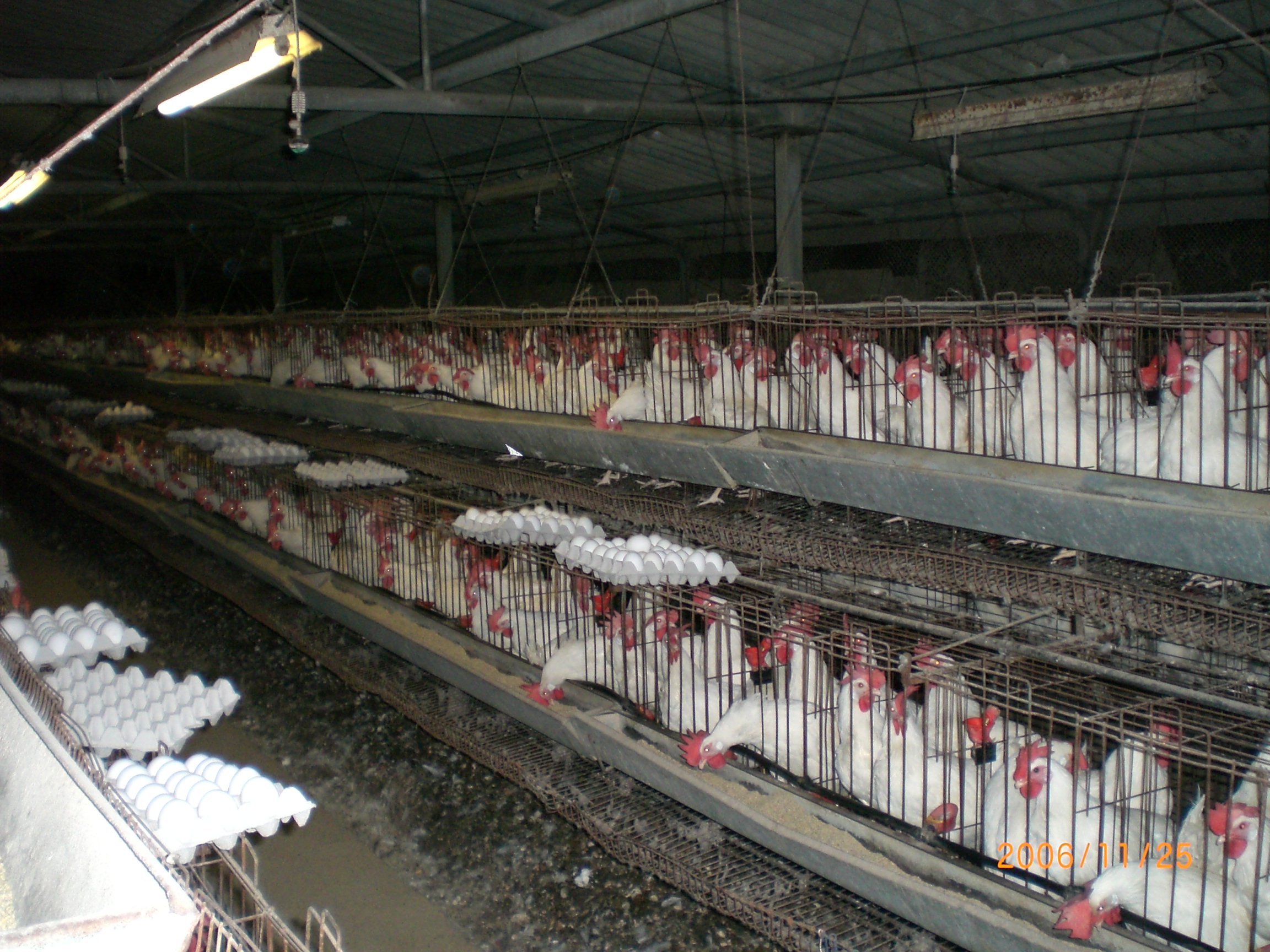
Laboratory mouse or rat colonies [11]
(17) Up to the late 19th century, there was a margin of power-balance between purposive consciousness and the environment. Since then, however, it has altered dramatically. And the rate of its change increases rapidly as technology advances.
Conscious man, as a changer of his environment, is now fully able to wreck himself and that environment -- with the very best of conscious intentions. (421a)
(18) Our mind is normally a homeostatic system. So other corrective processes usually balance the disruptions and distortions of conscious purpose. However, in the last century or so, a certain sociological phenomenon has begun to threaten that balance. Our modern societies have given the legal status of purpose to such "self-maximalizing entities" as trusts, corporations, political parties, unions, nations, and so forth. But biologically speaking, they are not persons at all. They are merely aggregates of parts of persons.
When Mr Smith enters the board room of his company, he is expected to limit his thinking narrowly to the specific purposes of the company or to those of that part of the company which he 'represents'. Mercifully it is not entirely possible for him to do this and some company decisions are influenced by considerations which spring from wider and wise parts of the mind. But ideally, Mr Smith is expected to act as a pure, uncorrected consciousness -- a dehumanized creature. (421b-c)
(19) There are, however, corrective factors. They are "areas of human action which are not limited by the narrow distortions of coupling through conscious purpose and where wisdom can obtain." (421c)
(a) The most important corrective factor is love. Consider Martin Buber's classification of interpersonal relations. "I-Thou" relations are different from "I-It" relations. The normal pattern of human interaction toward inanimate objects characterizes "I-Thou" relationships. However, in "I-It" relations, purpose is more important than love. But "I-Thou" relations should be possible between man, society, and the ecosystem.
(b) Other corrective systems are the arts, poetry, music, and the humanities. They involve more parts of the mind than consciousness will admit.
The heart has reasons which the reason cannot know.
Le coeur a ses raisons que la raison ne connaît point.
(c) "Contact between man and animals and between man and the natural world breeds, perhaps -- sometimes -- wisdom." (422a)
(d) Religion also serves as such a corrective factor.
(20) Bateson concludes by quoting from the Book of Job. to help us remember that "Job's narrow piety, his purposiveness, his common sense and his worldly success are finally stigmatized." God's voice speaks to Job from a whirlwind, explaining why Job must learn his dependent place among all the other creatures. And he must accept that so much of nature will have reasons he can never understand, but nonetheless he must acknowledge their rightful superiority to humanity. Job and the rest of the human species lives in a complex ecosystem. No matter how advanced our knowledge, we cannot extricate ourselves from nature. If we do have any purpose, it is merely to keep our subsystem circulating in support of the larger ecosystem.
From
Bateson, Gregory. "Effects of Conscious Purpose on Human Adaptation." in Steps to an Ecology of Mind. London: Granada Publishing, 1972.
Images from:
[1]
[2]
[3]
[4]
[5]
[6]
[7]
[7.5]
[8]
[9]
[10]
[11]


.jpeg)