5 Apr 2009

Carroll's Wild Game. "The Queen's Croquet-Ground" in Alice's Adventures in Wonderland

[The following is summary. The full text is provided below. Image credits are given at the end.]


Lewis Carroll

Alice's Adventures in Wonderland

Chapter VIII: The Queen's Croquet-Ground


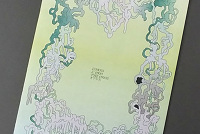
Playing-card gardeners paint white roses red. [Image 1.]


Alice nears. They rebuke each other for carelessly splashing paint. Five insults Seven, who angrily throws his wet brush to the ground.

Alice interrupts. She asks why they paint roses. Card Two explains that they were supposed to plant red roses instead. If the Queen learned, she would behead them.

Suddenly Five calls out that the Queen has arrived. The gardeners fall flat upon the ground.

The royal procession ensues. The Queen demands Alice's name. She responds politely. The Queen then asks who the fallen cards are. [2]


When Alice says it's none of her business, the Queen calls for her head. The King calms the Queen, who demands the Knave flip-over the cards. The gardeners rise and try explaining their deed. Before they can even begin, the Queen calls for their heads.

Then the Queen asks Alice if she plays croquet. Alice shouts her affirmation: "Yes!" Then the girl asks the White Rabbit where the Duchess is. He explains she has been imprisoned for boxing the Queen's ears.

The Queen demands everyone take their places, and the game begins.
Alice thought she had never seen such a curious croquet-ground in her life; it was all ridges and furrows; the balls were live hedgehogs, the mallets live flamingoes, and the soldiers had to double themselves up and to stand on their hands and feet, to make the arches.
[3]


Alice's first difficulty is holding the flamingo straight. She firmly tucks its body under her arm. But as soon as she swings it to hit the hedgehog-ball, the flamingo rebels. It twists its neck in a loop to raise its head, looking squarely into Alice's eyes. All the while, the hedgehog unrolls himself, and begins crawling away. [4]


besides all this, there was generally a ridge or furrow in the way wherever she wanted to send the hedgehog to, and, as the doubled-up soldiers were always getting up and walking off to other parts of the ground, Alice soon came to the conclusion that it was a very difficult game indeed.
The players all played at once without waiting for turns, quarrelling all the while, and fighting for the hedgehogs; and in a very short time the Queen was in a furious passion, and went stamping about, and shouting `Off with his head!' or `Off with her head!' about once in a minute.
Alice fears the confusion, and seeks secret escape.

Just then, she notices the Cheshire Cat's grin hover in the air. The disembodied mouth asks how Alice is doing. Gradually the Cat's head appears.
The players all played at once without waiting for turns, quarrelling all the while, and fighting for the hedgehogs; and in a very short time the Queen was in a furious passion, and went stamping about, and shouting `Off with his head!' or `Off with her head!' about once in a minute.
The cat asks Alice's opinion of the Queen. Seeing her approach, Alice says she thinks the Queen was so likely to win that there is no need to finish playing. The King asks Alice who she speaks-to. So she introduces the Cheshire Cat. He behaves rudely toward the King, who demands his removal. The Queen calls for his head.

Alice returns to the game. The Queen screams with passion, calling for the execution of players who missed their turns.
she did not like the look of things at all, as the game was in such confusion that she never knew whether it was her turn or not. So she went in search of her hedgehog.
But the hedgehog ball was fighting with another ball. So Alice decides to croquet one with the other. But her flamingo had escaped across the garden, trying to fly up into a tree to hide.
By the time she had caught the flamingo and brought it back, the fight was over, and both the hedgehogs were out of sight: `but it doesn't matter much,' thought Alice, `as all the arches are gone from the side of the ground.'
So Alice returns to the Cheshire Cat. But when she arrives, she sees commotion. [5]


The King, Queen, and executioner dispute. They each explain their argument to Alice.

The executioner claims that you cannot behead the Cat, because there is no body to sever it from. The King argues that anything with a head can be beheaded. To say otherwise is nonsense. The Queen threatens to cut off everyone's head if someone does not find a solution.

Alice explains that the Cat belongs to the Duchess, so they had better ask her. The Queen demands the Duchess be fetched from prison.
The Cat's head began fading away the moment he was gone, and, by the time he had disappeared; so the King and the executioner ran wildly up and down looking for it, while the rest of the party went back to the game.


From the original text:

CHAPTER VIII

THE QUEEN'S CROQUET-GROUND

A large rose-tree stood near the entrance of the garden: the roses growing on it were white, but there were three gardeners at it, busily painting them red. Alice thought this a very curious thing, and she went nearer to watch them, and just as she came up to them she heard one of them say, `Look out now, Five! Don't go splashing paint over me like that!'

`I couldn't help it,' said Five, in a sulky tone; `Seven jogged my elbow.'

On which Seven looked up and said, `That's right, Five! Always lay the blame on others!'

`You'd better not talk!'said Five. `I heard the Queen say only yesterday you deserved to be beheaded!'

`What for?' said the one who had spoken first.

`That's none of your business, Two!' said Seven.

`Yes, it is his business!' said Five, `and I'll tell him--it was for bringing the cook tulip-roots instead of onions.'

Seven flung down his brush, and had just begun `Well, of all the unjust things--' when his eye chanced to fall upon Alice, as she stood watching them, and he checked himself suddenly: the others looked round also, and all of them bowed low.

`Would you tell me,' said Alice, a little timidly, `why you are painting those roses?'

Five and Seven said nothing, but looked at Two. Two began in a low voice, `Why the fact is, you see, Miss, this here ought to have been a red rose-tree, and we put a white one in by mistake; and if the Queen was to find it out, we should all have our heads cut off, you know. So you see, Miss, we're doing our best, afore she comes, to--' At this moment Five, who had been anxiously looking across the garden, called out `The Queen! The Queen!' and the three gardeners instantly threw themselves flat upon their faces. There was a sound of many footsteps, and Alice looked round, eager to see the Queen.

First came ten soldiers carrying clubs; these were all shaped like the three gardeners, oblong and flat, with their hands and feet at the corners: next the ten courtiers; these were ornamented all over with diamonds, and walked two and two, as the soldiers did. After these came the royal children; there were ten of them, and the little dears came jumping merrily along hand in hand, in couples: they were all ornamented with hearts. Next came the guests, mostly Kings and Queens, and among them Alice recognised the White Rabbit: it was talking in a hurried nervous manner, smiling at everything that was said, and went by without noticing her. Then followed the Knave of Hearts, carrying the King's crown on a crimson velvet cushion; and, last of all this grand procession, came THE KING AND QUEEN OF HEARTS.

Alice was rather doubtful whether she ought not to lie down on her face like the three gardeners, but she could not remember every having heard of such a rule at processions; `and besides, what would be the use of a procession,' thought she, `if people had all to lie down upon their faces, so that they couldn't see it?' So she stood still where she was, and waited.

When the procession came opposite to Alice, they all stopped and looked at her, and the Queen said severely `Who is this?' She said it to the Knave of Hearts, who only bowed and smiled in reply.

`Idiot!' said the Queen, tossing her head impatiently; and, turning to Alice, she went on, `What's your name, child?'

`My name is Alice, so please your Majesty,' said Alice very politely; but she added, to herself, `Why, they're only a pack of cards, after all. I needn't be afraid of them!'

`And who are these?' said the Queen, pointing to the three gardeners who were lying round the rosetree; for, you see, as they were lying on their faces, and the pattern on their backs was the same as the rest of the pack, she could not tell whether they were gardeners, or soldiers, or courtiers, or three of her own children.

`How should I know?' said Alice, surprised at her own courage. `It's no business of mine.'

The Queen turned crimson with fury, and, after glaring at her for a moment like a wild beast, screamed`Off with her head! Off--'

`Nonsense!' said Alice, very loudly and decidedly, and the Queen was silent.

The King laid his hand upon her arm, and timidly said `Consider, my dear: she is only a child!'

The Queen turned angrily away from him, and said to the Knave `Turn them over!'

The Knave did so, very carefully, with one foot.

`Get up!' said the Queen, in a shrill, loud voice, and the three gardeners instantly jumped up, and began bowing to the King, the Queen, the royal children, and everybody else.

`Leave off that!' screamed the Queen. `You make me giddy.' And then, turning to the rose-tree, she went on, `What have you been doing here?'

`May it please your Majesty,' said Two, in a very humble tone, going down on one knee as he spoke, `we were trying--'

`I see!' said the Queen, who had meanwhile been examining the roses. `Off with their heads!' and the procession moved on, three of the soldiers remaining behind to execute the unfortunate gardeners, who ran to Alice for protection.

`You shan't be beheaded!' said Alice, and she put them into a large flower-pot that stood near. The three soldiers wandered about for a minute or two, looking for them, and then quietly marched off after the others.

`Are their heads off?' shouted the Queen.

`Their heads are gone, if it please your Majesty!' the soldiers shouted in reply.

`That's right!' shouted the Queen. `Can you play croquet?'

The soldiers were silent, and looked at Alice, as the question was evidently meant for her.

`Yes!' shouted Alice.

`Come on, then!' roared the Queen, and Alice joined the procession, wondering very much what would happen next.

`It's--it's a very fine day!' said a timid voice at her side. She was walking by the White Rabbit, who was peeping anxiously into her face.

`Very,' said Alice: `--where's the Duchess?'

`Hush! Hush!' said the Rabbit in a low, hurried tone. He looked anxiously over his shoulder as he spoke, and then raised himself upon tiptoe, put his mouth close to her ear, and whispered `She's under sentence of execution.'

`What for?' said Alice.

`Did you say "What a pity!"?' the Rabbit asked.

`No, I didn't,' said Alice: `I don't think it's at all a pity. I said "What for?"'

`She boxed the Queen's ears--' the Rabbit began. Alice gave a little scream of laughter. `Oh, hush!' the Rabbit whispered in a frightened tone. `The Queen will hear you! You see, she came rather late, and the Queen said--'

`Get to your places!' shouted the Queen in a voice of thunder, and people began running about in all directions, tumbling up against each other; however, they got settled down in a minute or two, and the game began. Alice thought she had never seen such a curious croquet-ground in her life; it was all ridges and furrows; the balls were live hedgehogs, the mallets live flamingoes, and the soldiers had to double themselves up and to stand on their hands and feet, to make the arches.

The chief difficulty Alice found at first was in managing her flamingo: she succeeded in getting its body tucked away, comfortably enough, under her arm, with its legs hanging down, but generally, just as she had got its neck nicely straightened out, and was going to give the hedgehog a blow with its head, it would twist itself round and look up in her face, with such a puzzled expression that she could not help bursting out laughing: and when she had got its head down, and was going to begin again, it was very provoking to find that the hedgehog had unrolled itself, and was in the act of crawling away: besides all this, there was generally a ridge or furrow in the way wherever she wanted to send the hedgehog to, and, as the doubled-up soldiers were always getting up and walking off to other parts of the ground, Alice soon came to the conclusion that it was a very difficult game indeed.

The players all played at once without waiting for turns, quarrelling all the while, and fighting for the hedgehogs; and in a very short time the Queen was in a furious passion, and went stamping about, and shouting `Off with his head!' or `Off with her head!' about once in a minute.

Alice began to feel very uneasy: to be sure, she had not as yet had any dispute with the Queen, but she knew that it might happen any minute, `and then,' thought she, `what would become of me? They're dreadfully fond of beheading people here; the great wonder is, that there's any one left alive!'

She was looking about for some way of escape, and wondering whether she could get away without being seen, when she noticed a curious appearance in the air: it puzzled her very much at first, but, after watching it a minute or two, she made it out to be a grin, and she said to herself `It's the Cheshire Cat: now I shall have somebody to talk to.'

`How are you getting on?' said the Cat, as soon as there was mouth enough for it to speak with.

Alice waited till the eyes appeared, and then nodded. `It's no use speaking to it,' she thought, `till its ears have come, or at least one of them.' In another minute the whole head appeared, and then Alice put down her flamingo, and began an account of the game, feeling very glad she had someone to listen to her. The Cat seemed to think that there was enough of it now in sight, and no more of it appeared.

`I don't think they play at all fairly,' Alice began, in rather a complaining tone,' and they all quarrel so dreadfully one can't hear oneself speak--and they don't seem to have any rules in particular; at least, if there are, nobody attends to them--and you've no idea how confusing it is all the things being alive; for instance, there's the arch I've got to go through next walking about at the other end of the ground--and I should have croqueted the Queen's hedgehog just now, only it ran away when it saw mine coming?'

`How do you like the Queen?' said the Cat in a low voice.

`Not at all,' said Alice: `she's so extremely--' Just then she noticed that the Queen was close behind her, listening: so she went on, `--likely to win, that it's hardly worth while finishing the game.'

The Queen smiled and passed on.

`Who are you talking to?' said the King, going up to Alice, and looking at the Cat's head with great curiosity.

`It's a friend of mine--a Cheshire Cat,' said Alice: `allow me to introduce it.'

`I don't like the look of it at all,' said the King: `however, it may kiss my hand if it likes.'

`I'd rather not,' the Cat remarked.

`Don't be impertinent,' said the King, `and don't look at me like that!' He got behind Alice as he spoke.

`A cat may look at a king,' said Alice. `I've read that in some book, but I don't remember where.'

`Well, it must be removed,' said the King very decidedly, and he called the Queen, who was passing at the moment, `My dear! I wish you would have this cat removed!'

The Queen had only one way of settling all difficulties, great or small. `Off with his head!' she said, without even looking round.

`I'll fetch the executioner myself,' said the King eagerly, and he hurried off.

Alice thought she might as well go back, and see how the game was going on, as she heard the Queen's voice in the distance, screaming with passion. She had already heard her sentence three of the players to be executed for having missed their turns, and she did not like the look of things at all, as the game was in such confusion that she never knew whether it was her turn or not. So she went in search of her hedgehog.

The hedgehog was engaged in a fight with another hedgehog, which seemed to Alice an excellent opportunity for croqueting one of them with the other: the only difficulty was, that her flamingo was gone across to the other side of the garden, where Alice could see it trying in a helpless sort of way to fly up into a tree.

By the time she had caught the flamingo and brought it back, the fight was over, and both the hedgehogs were out of sight: `but it doesn't matter much,' thought Alice, `as all the arches are gone from the side of the ground.' So she tucked it away under her arm, that it might not escape again, and went back for a little more conversation with her friend.

When she got back to the Cheshire Cat, she was surprised to find quite a large crowd collected round it: there was a dispute going on between the executioner, the King, and the Queen, who were all talking at once, while all the rest were quite silent, and looked very uncomfortable.

The moment Alice appeared, she was appealed to by all three to settle the question, and they repeated their arguments to her, though, as they all spoke at once, she found it very hard indeed to make out exactly what they said.

The executioner's argument was, that you couldn't cut off a head unless there was a body to cut it off from: that he had never had to do such a thing before, and he wasn't going to begin at HIS time of life.

The King's argument was, that anything that had a head could be beheaded, and that you weren't to talk nonsense.

The Queen's argument was, that if something wasn't done about it in less than no time she'd have everybody executed, all round. (It was this last remark that had made the whole party look so grave and anxious.)

Alice could think of nothing else to say but `It belongs to the Duchess: you'd better ask her about it.'

`She's in prison,' the Queen said to the executioner: `fetch her here.' And the executioner went off like an arrow.

The Cat's head began fading away the moment he was gone, and, by the time he had disappeared; so the King and the executioner ran wildly up and down looking for it, while the rest of the party went back to the game.

4 Apr 2009

The Mind of the Wild: Shepard, Coming Home to the Pleistocene, Ch.4, subsection 1


Paul Shepard

Coming Home to the Pleistocene

Chapter IV: How the Mind Once Lived

Subsection 1

The Mind of the Wild


Long before civilization, there were human ancestors who foraged the Pliocene/Pleistocene savannas. They emerged from a "mammalian ecology" that had been under development already for about 50 million years. Our prehuman ancestors survived and adapted as animals. Gradually their brain would double in size. And the way it developed was guided by the demand that they outsmart their predators and prey.
Our mind came out of that long ago scene and we owe its capacity to our ancient ancestors who faced, survived, and adapted to a challenging, rich, wild milieu that remains etched on our craniums like ancient paintings on cave walls. (51c, emphasis mine)
Mammals at this time played a game of hunter and hunted "based on energy flow and food chains."
This game of predation and survival was a long-standing matter of mutual pruning that favored the most swift, cunning, and discerning over those who were slow to catch on and flee. (52a)
If our ancestors had developed in the jungle, we would not have needed to abstract matters from what is immediate to us. Our prey's footprints would wash away in the jungle's wetness. So we would not be able to think of them as being here at a previous time, and now at a nearby place. The thickness and noise of the forest would conceal our enemies' sounds. So we would not be able to locate them them with our ears. The jungle's rich texture and contents allows for some many "hidey-holes" that it would tax our minds too much to try to deduce their locations. And there would be so many sources of protein nearby, such as insects and rodents, that we would not need to conduct a lengthy chase for such nourishment.

However, we developed on the savanna. It is open. So we can see predators and prey from afar. And we can hear them at great distances. This allowed our ancestral "thinkers to displace events in both time and space." (52b)
A bent tuft of grass, slowly raising its head, clocks the time since it was trampled; a distant call in known terrain says it is the there, and not the here, where attention should be paid. In open terrain, big mobile prey can escape easily and dangerous predators may be forced to strategize from a distance." (52b)
Before our species arrived upon the savanna, other species had played this game. They came and went as smarter competitors drove less clever ones away or into extinction. But we entered with some neurological advantages.
Because of little neural connections, our ancestors were well ahead of most of their kinfolk in the swamps, brush, and forest in terms of discerning the relationships between clues: the color of droppings, the presence of blood, the body language of a pregnant or nursing female, the intentionality of lions, and a thousand other important events that occurred around them. (52c, emphasis mine)
Our ancestors entered in a very primitive and vulnerable state.
But they brought with them the venerable skills of primate scheming, intrigue, and an arboreal and social agility that had characterized simians for millions of years. (52d)
There were important advantages we brought along or perfected: bipedality, larger size, the hand, and, of course, that calculating brain already bigger in ratio to body size than mostmammals possessed. (53a, emphasis mine)
Like other primates, we had the innate ability to learn by imitation. But soon this primitive sort of learning
was "transcended by the unique human capacity to reason abstractly. This ability may have arisen in the course of hunting." (53a, emphasis mine)

Perhaps we "called" or "scolded" other animals to determine their locations. Or perhaps we "read" their tracks, which involves deductive and hermeneutic capacities. Or we could have made other interpretive reasoningsbased on
the smell of urine, the age and composition of dung, the drying of bitten stems, or the overall pattern of footprints and traces in a day's experience. Escalated into a year's experience, animal migrations could be anticipated by the signs of plant phenology, the phases of the moon and sun, and the changing sounds of the year. (53b)
And unlike chimpanzees, we hunted. So effective were our techniques that we captured animals much larger than ourselves. This required social organization that might have originated in mutual scavenging.

In these open playing fields, the "catcher had to be smarter than the caught." (53d)
Those who fled had to understand the limits of distance, the intentions of others, and the ability to control the abyssal terror that itself would engulf them if they submitted to panic. Out of this immense drama among dozens of species of big mammals, herbivore and carnivore, came brains, mind, memory, and strategy -- spontaneous and conscious. (53-54)
Our ancestors did not at first rule this game-space. But our brains soon came to double the size of chimpanzees'.
They learned the open-country craft of the hunter and the cunning of the prey, for they were the stalking, tracking predator, the wary, elusive victim, and a passing opportunist in a reciprocity not only between hunter and hunted but within the group and, eventually, aspects of the self. (54b)
There were indirect consequences of our evolution as smart hunters. We formed societies.
Out of their peculiar vulnerability, their proclivity for seeking rock shelters, and their strong primate instincts for communication came the selection of a genome for thinking out events. (54bc)


Shepard, Paul. Coming Home to the Pleistocene. Washington, D.C.: Island Press, 1998.

Trask, The Story of Cybernetics, Ch1, "Control"

by Corry Shores
[Search Blog Here. Index-tags are found on the bottom of the left column.]

[Central Entry Directory]
[Computation Entry Directory]

Maurice Trask

The Story of Cybernetics

Chapter 1: Control

Cybernetics is a matter of control. All our actions are controlled in either of two ways,
1) because we chose to do make some movement, or
2) we make an automatic reflex movement, like pulling our hands away from fire.

Cybernetics comes from the Greek word kubernetes, which means steersman or helmsman. It is also the root for the English word 'to govern,' which means also 'to rule,' 'to regulate,' and 'to control.' "The skill used in steering is one of continuous judgment."
The helmsman continually adjusts his tiller to keep the boat on course. He observes any variation from his course, estimates the adjustment needed to overcome it, moves the tiller, observes the result and repeats the process. (9c-d)
Our course of action is a series of approximations. So we control by minimizing error.
The helmsman corrects the error resulting from his previous attempt to correct a previous error. At the same time he must compensate for the effect of wind, current, speed and their resultant forces on the hull and rudder. (10d)
So to control our actions toward a goal, we must know our degree of progress. This requires some form of communication, which allows us to gauge efforts and compensations. (9d)

Trask offers this example: we pick-up an egg and put it in an eggcup.

First our hand moves toward the egg. Then our body corrects our balance. Our fingers grasp the egg with just enough pressure so that we do not break it. We lift it and place it in the cup.


We do not consciously tell each muscle to contract at the right time. Rather, we just set a goal: move the egg into the cup. Nonetheless, some of the actions, such as gripping the egg, require much care. If our hand is not regulated by feedback, we will crush the egg.


To reach the egg, we must guide our arm until we close the gap between our hand and the egg. This involves feedback, which are the messages our senses send to our nervous system with information regarding our hand's progress toward its goal. Then our nervous system sends messages to our muscles with instructions on how to act. As the muscles use energy to move closer, the feedback cycles repeat until we reach the egg.

We call the senses and the nervous system the "information" system. It carries reports and instructions. We call the muscles an "energy" system. It performs the work.
Cybernetics is the study and use of information systems to regulate energy systems. (14a)
Another example: we must park a car in the tight space between two other cars. Our passenger gets out and watches from the sidewalk. He uses his hand to motion us backward, and to tell us to halt. In this case, the passenger is the sensor. His hand signals are the messages. We, the driver, are the receiver. We put the messages into actions. So we are called the "effector." Together the two of us form the information cycle. And the car is the energy system. (14bc)

But consider when conditions change. If one of the neighboring cars begins to depart, we must make some decision. Should we wait? Continue parking? How we respond depends on the contingencies of the circumstance.

The classic example of a feedback loop is an automatic heating system. For contrast, first consider a simple heater. We turn it on, and leave it running. It will continue to heat the room until we can no longer stand the heat, and we must manually turn it off. Then, the heat will fall until the room drops to the outside temperature. Such a system is an open loop. It has no way to control itself or adapt to changing conditions.


We now consider a thermostat that can be set to maintain a certain temperature. When the room gets too cold, it turns on. Then when the air warms up to a certain degree, the heater turns off. This is a closed loop system. It oscillates between limits. And it can be designed to attain more efficiently the desired temperature. And if conditions change, such as a sudden rise in temperature outside, the thermostat can adapt. Closed loop systems, then, are governed by feedback. We find them in all cybernetic processes.

Many things can be cybernetic systems: children, animals, political systems, production lines, traffic, computers, storms, stock exchanges, and so on. (17d)


Trask, Maurice. The Story of Cybernetics. London: Institute of Contemporary Arts, 1971.

Chance and Computer Creativity in Dartnall, "On Having a Mind of Your Own"

by Corry Shores
[Search Blog Here. Index-tags are found on the bottom of the left column.]

[Central Entry Directory]
[Computation Entry Directory]


[The following is a selective summary.]


Terry Dartnall

"On Having a Mind of Your Own"

Lady Lovelace was Charles Babbage's friend and colleague. She opined that computers can never be creative, because they "have no pretension whatever to originate anything." (29b) Many share her opintion. We seem to regard "machine creativity" as an oxymoron.

If she is right, then cognitive science will never fully simulate human consciousness on a computer. (29-30) [Hence efforts for whole brain emulation and mental uploading would fail.]

We may summarize the argument this way:

1) If X is designed to respond in a predictable way to its instruction, then X is not creative.
2) Computers are designed to respond in a predictable way to their instructions.
-----------------
3) Therefore computers are not creative.

The idea of predictability is bound-up with notions of determinism. Dartnall distinguishes four types of determinist positions.
a) Determinism: every event is caused.
b) Hard determinism: because every event is caused, there is no freewill.
c) Libertarianism: some events are uncaused. Certain brain or mind events are examples. Thus we have freewill.
d) Soft determinism or compatibilism: every event is caused. But, this is compatible with freewill. For, some actions are the product of our individual personality. Such free actions are caused by our preferencies, volitions and desires. This is what we mean when we refer to 'free action.' (36a)

Dennett offers an argument supporting libertarianists. They believe there is randomness. But traditionally "random" has connoted pointlessness or meaninglessness. Yet, "the point that the libertarian wishes to make is exactly that random actions (actions that are random in the sense of being undetermined) need not be meaningless." (37a)

Dennett suggests there are two factors involved when we make decisions.
1) a "consideration-generator whose output is to some degree undetermined," and
2) a "series of considerations that are either rejected as irrelevant by the agent, or selected as having bearing on the reasoning process." (37bc)

He then quotes Valéry:
It takes two to invent anything. The one makes up combinations; the other one chooses, recognises what he wishes and what is important to him in the mass of things which the former has imparted to him. What we call genius is much less the work of the first one than the readiness of the second one to grasp the value of what has been laid before him and to choose it. (qt in Dartnall 37c)
Dennet suggests that we place the randomness in the generative component. This way randomness will work in the service of creativity, rather than merely create chaos. (37-38)

[Consider also filmmaker Stan Brakhage's description of John Cage's creative process. Brakhage does not see chance operations in John Cage’s works, which he created using the “hazard of the dice;” for, Cage rejected almost all the outcomes, until arriving upon one that seemed to express his “soul.” It needed to be a work that, although created by chance, was still something he could authenticate with his signature and take responsibility-for. (From Brakhage, "Encounters" interview on the Criterion Anthology DVD).]


Dartnall, Terry. "Introduction: On Having a Mind of Your Own." in Artificial Intelligence and Creativity: An Interdisciplinary Approach. Ed. Terry Dartnall. Dordrecht: Kluwer Academic Publishers, 1994.

Criteria for Computer Creativity. Johnson-Laird's Computer and the Mind, Ch 14, "Creation"

by Corry Shores
[Search Blog Here. Index-tags are found on the bottom of the left column.]

[Central Entry Directory]
[Computation Entry Directory]


P. N. Johnson-Laird

The Computer and the Mind:
An Introduction to Cognitive Science

Chapter 14: Creation


Johnson-Laird will advance a computational theory of creativity. His thesis is that creative processes are computational.


A Working Definition of Creativity

Johnson-Laird proposes three characteristic properties of creativity.

1) "like all mental processes, it starts from some given building blocks. One cannot create out of nothing."
2) "the process has no precise goal, but only some pre-existing constraints or criteria that it must meet." "One creates within genres or paradigms, and even the creation of a new genre must meet certain criteria."
3) "a creative process yields an outcome that is novel for the individual, not merely remembered or perceived, and not constructed by rote or by a simple deterministic procedure." If we multiply two numbers and get a figure we never considered before, that is not creation. It cannot be deterministic like calculation. (255b-d)

But the results of creative behavior may not be truly original. For, others may have considered the idea before you. "What is valuable about a creative process is that its results are judged as striking, brilliant, and not banal." "And they will never be predictable." "The products of creative mental process themselves are not predictable." (256a)


Creation as a Process that is not Deterministic

Consider, for example, Picasso as he is painting a particular picture. At any moment, there are probably several alternative brush strokes that he could make - all of which would yield a perfectly recognizable Picasso picture. (256bc)

Whatever it is that defines Picasso, it does not "legislate for just one possible brush stroke at each point in the pointing process." That would make creativity deterministic.

Yet, some argue that the arbitrary decisions Picasso made were governed by peripheral causes such as muscle twitches, the wind's direction, and so forth. [This would be like Hume's notion of secrete causes. See §288 of his Treatise.] However, we can still argue that even if there are deterministic causes, the mind might be "determined" to make its arbitrary decision according to "the mental equivalent of flipping a coin." (256d)

Rather than take a stand on all the possible interpretations, Johnson-Laird will merely state that "a theory of creation must allow for more than one possible continuation, and cannot state how the decision is made amongst them. Hence, by definition it will not be deterministic. Real computers are deterministic, but they can simulate arbitrary choices." (257a)


Johnson-Laird, P. N. The Computer and the Mind: An Introduction to Cognitive Science. Cambridge: Harvard University Press, 1988.

31 Mar 2009

Turing Computation of the Natural Numbers


by Corry Shores
[Search Blog Here. Index-tags are found on the bottom of the left column.]

[Central Entry Directory]
[Computation Entry Directory]


Turing Computation
of the Natural Numbers


We will now build from our previous post on Turing machines. What we want is a mechanical computation of the natural numbers.

[I obtain the following program from Peter Bradley's wonderful animated site on Turing Machines.]

Our abstract machine will compute the natural numbers and display them in binary. So it is a "binary counter" machine.

This is its program, displayed as a "machine table." The S represents the number that the machine is reading. The subscript '0' means it would be a zero, and the subscript '1' means it is a one.


The q's stand for the two different instructions. L means to move left. R means to move right. There are two boxes for each q instruction, because the machine will see either of two symbols (1 or 0), and according to which one, it will perform some distinct task. We could articulate the instructions this way.

q1) If the scanned symbol is zero, write a zero overtop of it, move to the left, and begin instruction q1. If the scanned symbol is one, write a one overtop of it, move to the right, and begin instruction q2.
q2) If the scanned symbol is zero, write a one instead, move to the left, and begin instruction q1. If the scanned symbol is one, write a zero instead, move to the right, and begin instruction q2.


We will follow it through all the steps leading to its count of four.

It begins on a zero.


All the other boxes are zero except for one. At two spaces to the left of the starting point, there is a '1'. We do not read this with the number. Its function is to 'bump' the machine back to the right so it may continue its adding. All the boxes to the right of the bumper are the binary digit places that display each new counted number as it is added. However, this display shows them inversely. Hence we need to think of the ascending digit places moving to the right. So normally 100 equals four in binary. But here it would be displayed as 001.

So the machine finds itself at the second zero. We place a yellow arrow wherever the machine is found at the start of the given instruction. It always moves at the end of the instruction. We display its direction with black arrows.


We begin at the first instruction q1. Because the machine starts at a zero, we look to S0. It tells the machine to write a zero, and to move to the left. There is already a zero there, so nothing changes.


Likewise for the next step. Instruction q1 repeats.


But now the machine stands above a '1'.
It writes a '1' again, then it moves to right and begins instruction q2.


At this box there is a zero. So the machine replaces it with a '1', moves the left, and begins instruction q2. At this point, we have our first counted value: 1


The number it scans next is a '1', so it writes a '1' over it, moves to the right, and begins instruction q2.


Here the machine finds a '1'. So it replaces it with a zero, moves to the right to begin q2. But notice the similarity to when we clear the binary abacus.


At the next place it finds a zero. Instruction q2 tells it then to write a '1' instead and move to the left. This is equivalent to the carry procedure on the binary abacus.

So we see our first instance of clear and carry performed by the Turing Computer.


It now sees a zero. Instruction q1 tells it to write another zero, move to the left, and begin instruction q1.


It arrives upon the bumper. Instruction q1 tells it to write another '1' over it, move to the right, and begin instruction q2.


Now it sees a zero in the units place of our number display. Instruction q2 tells it to write a '1', move to the left, then begin instruction q1. In this way, we have added another number to get three.


It hits the bumper again, so it goes to the right and begins instruction q2.


Now it sees a '1' in the units place. Instruction q2 tells it to write a '0' instead, move to the right, and begin instruction q2. Here again is a clear procedure.


It sees another '1' in the next digit place. Instruction q2 tells it to write a zero, move to the right, and begin instruction q2. This is the second part of the clear/carry procedure.


Now it sees a '0'. Instruction q2 tells it to replace the '0' with a one, move the left, and begin instruction q1. This is the carry procedure that gets us to four. Now, the machine repeats the same clear/carry process as it had before.

Given an infinite amount of time, it will display the infinity of natural numbers.


See Peter Bradley's site on Turing Machines